Galeriji Filodrammatica Korzo 28/1, Rijeka
The glorious Mediterranean city is. a hive of contemporary art

A beautiful small city on the sea, Rijeka has a fascinating recorded history dating back to at least Roman times (with strong traces of Neolothic and ancient Celtic remains). While the ancient district of Trsat in the upper section of the city retains its medieval castle, the city is a marvellous assemblage of baroque architecture built during its 450 year period as a part of the magnificent Hapsburg Empire. In the 18thC much of the centre was rebuilt into a larger commercial and maritime city centred around its port. The port and naval base were crucial to the Empire, and the port and shipyards remain significant today. This creates a lively, active city with a working industrial base as well as all the charms that come naturally to a Mediterranean city. That does not mean it does not attract tourists, just that the tourists, like me, are a part of what is going on, not the focus of it.
The Croatian north coast around Rijeka reminds me a bit of the South of France, but way less built up and far greener. As well as the beauties of Rijeka such as Trsat and the lovely walks in the city, the lavish resort town of Opatija is only 40mins away by bus (more on that later), with plenty of beaches and forest areas a short bus ride away.
And so to art. Of course, Zagreb (2 hours drive away) is the national capital and has the biggest art school, but Riejka, as the third city, makes a strong showing with its School of Applied Arts at the University and its Centre for Modern and Contemporary Art and its gallery scene.
I visited the Filodrammatica Gallery in Rijeka’s downtown to see the exhibition that featured two well known Croatian artists Sebastijan Dračić and Ana Sladetić whose work I had always wanted to see. I was in luck. I had seen Dračić‘s work online but was unprepared by how overwhelming his canvases are! He is technically an ‘academic’ painter, trained in the fullest expertise of realistic oil painting. But this description is meaningless, since his creative expression is anything but staid or conventional. Words like photorealistic, photographic or even realist aren’t useful. He sees – and shows us – what a camera cannot: the future.
The exhibition addressed the problem that Utopian vision always implies its doppelganger, Dystopia. Dračić‘s paintings expressed a deep unease with future visions. Aware that where we are now has got. to be the starting point of where we must go next, he offers up delicately-rendered, color-saturated visions of total collapse, as beautiful as they are harrowing.

The painting Beelzebub shows a detail of a ruined city at night. Now, Croatia experienced the ruination of its eastern cities during the horrific war of the 90s but since that time we have witnessed the ruination of cities by war, earthquakes and other phenomena or even terrible building practices. The image, then, is horribly familiar. The perspective in the painting is interesting: we are looking down at the city with the aid of light coming from above. We are looking at what has been done to it, as if we have come upon it all of a sudden, or – worse, are responsible for the devastation.
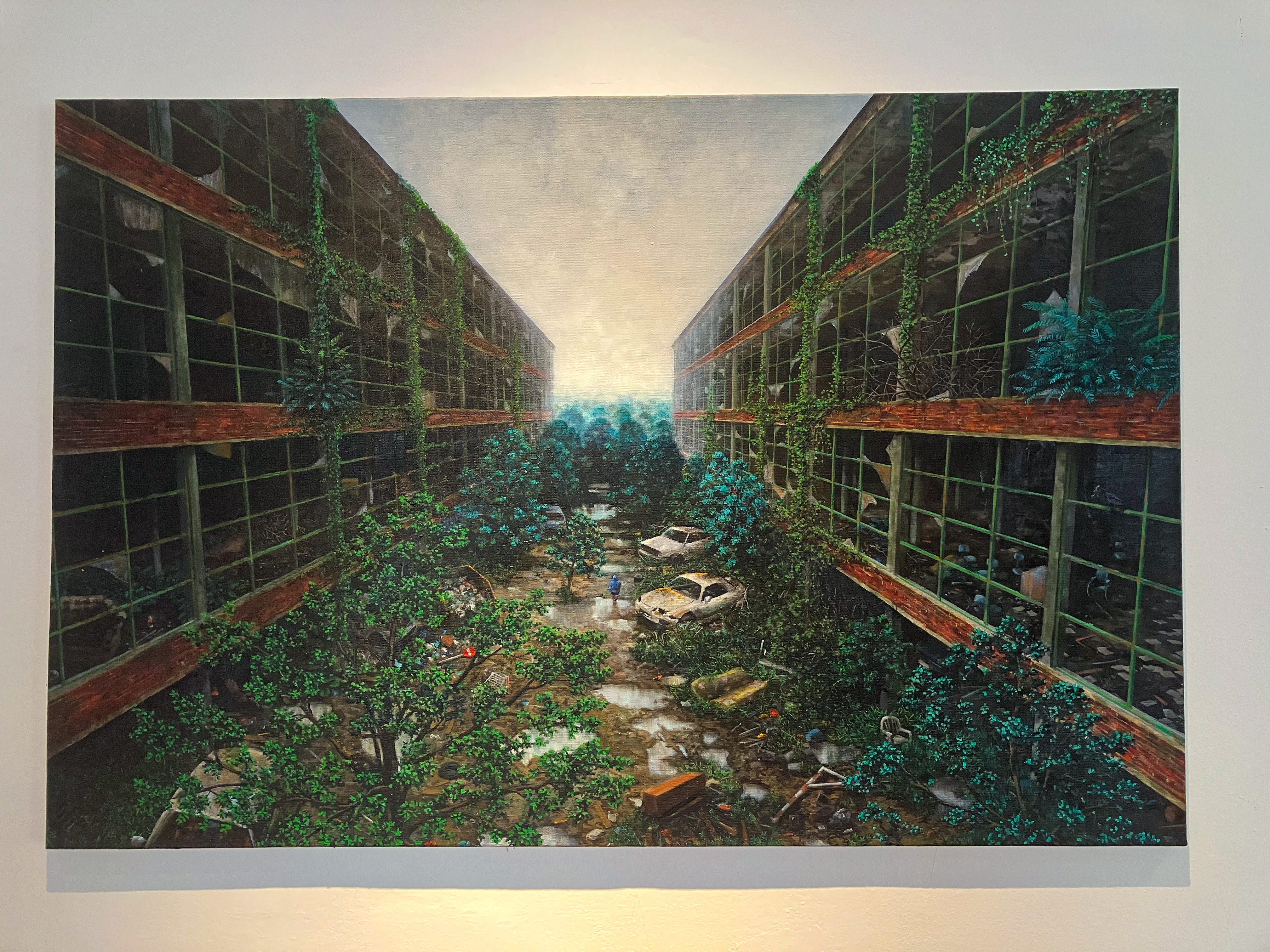

above: Sebastijan Dračić
Ana Sladetić takes a different approach, more conceptual and symbolic but likewise beautifully embedded in analogue practice.
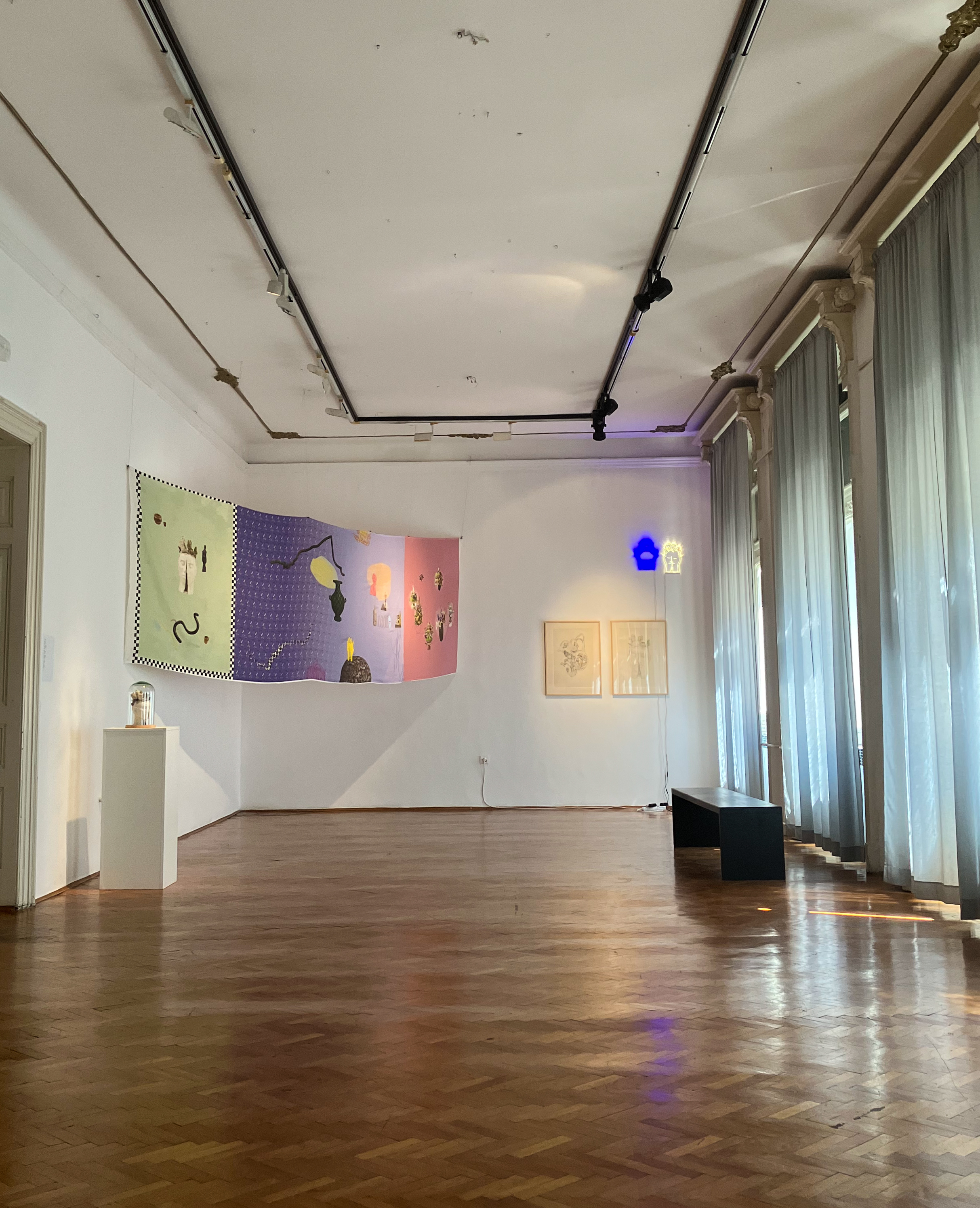
With an assemblage of textile, objects, light and drawing, Ana Sladetić
The first piece Glava (head) is a repeated motif throughout the work. It is a ceramic head, split down the middle from the bottom. The crown is topped by a diverse array of structures – trees, buildings, a bridge – everyday things that we see and store in our memories. How do we remember how to get home? Because we learn the environment. It’s all stored in the head! The head is in a glass case like a preserved piece of Victorian taxidermy.

The head appears again, alongside other symbols on a large textile banner. Then it becomes apparent, Sladetić is musing upon the notion of the head as a vessel. A vessel just as the vase represented alongside it is a vessel. Now the word and concept of vessel is interesting.
It can refer to a container such as a vase or a jug, or to a ship or boat. In the Bible a vessel is a person whom God calls and uses as a vessel or container for his ideas. Women are sometimes referred to as vessels: as ‘the weaker vessel’ compared to the man in holding God’s word. And as procreators or vessels for the next generation. So the word and the concept has the possibility of being problematic.
In Sladetić’s work here, the Head is full of quotidian stuff, but we don’t know what is in the vase.

On an Instagram post the artist writes that ‘Two motifs that repeated in the series of works – a head and a vase [hydria]. Each of them can store different necessary knowledge and resources, but each of them can also have cracks that can be (in)visible.’
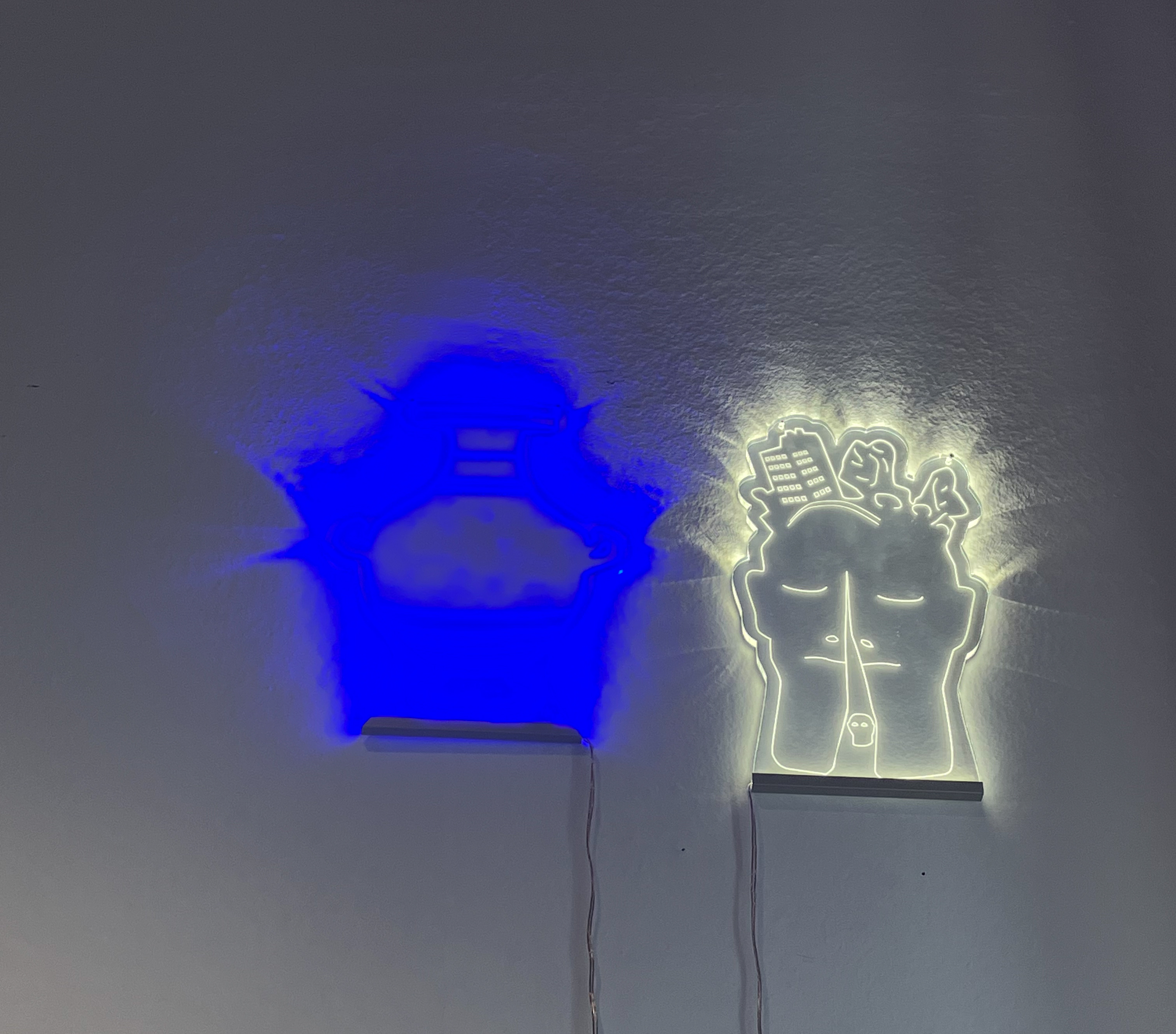


As you can probably tell, I loved this remarkable exhibition and felt very lucky to have seen it. I recommend that you look up these artists and have a look at what they are doing
http://drugo-more.hr/en/ Filodrammatica Gallery
Instagram @ana_sladetic and @sebastijandracic
About Rijeka
In summer it’s very easy, you just fly directly to Rijeka airport which is about 40 minutes out of town. Outside of the summer season however, you’re going to have to travel a bit further, but do not worry it is easy. There are regular flights into Zagreb, Pula and Split at different times of the year – and always flights to Zagreb. Or you can go to Trieste which is not far either. From Trieste or Zagreb it’s a pretty easy bus ride of two hours through very interesting and attractive landscape so I can even recommend doing that. There are plenty of places to stay in the city itself: apartments, a boatel, hotels and hostels. I was fortunate and stayed with a friend but it should not be a problem to find suitable accommodation. The city is beautiful and everything is walkable but there is excellent bus service.
 THE ART TRAVELLER
You must be logged in to post a comment.