‘TALE TONIC’ EXHIBITION: Marianne Fahmy and Nada El Kalaawy, The Africa Centre to march 30.

Art Travelling in London means the world comes to you much of the time! March 2024 sees the AWAN – Arab Women Artists Now! – festival in London. A wide range of activities and approaches abound in the festival, from literary events to films, music and visual art.
I went to see “Tale Tonic” an exhibition at the Africa Centre showcasing works by Egyptian artists Marianne Fahmy and Nada El Kalaawy. Both artists use cultural motifs, found pictures, objects, and historical references to create literal and metaphorical visualisations.
The concept of “Tale Tonic” encapsulates Fahmy and El Kalaawy’s skill in crafting intricate and imaginative narratives within their art. This exhibition creates an immersive storytelling environment, inviting viewers to contemplate, inquire, and form their own hypotheses. It encourages individual interpretation and facilitates a deeply personal and subjective connection with the artworks.
In this way, says curator Hanya ElGhamry, the exhibition aims to challenge the idea of a single, authoritative interpretation of perception. El Kalaawy and Fahmy invite us to consider how historical references, cultural motifs, and discovered pictures shape our world, allowing us to examine and reflect on historic material freely and honestly.
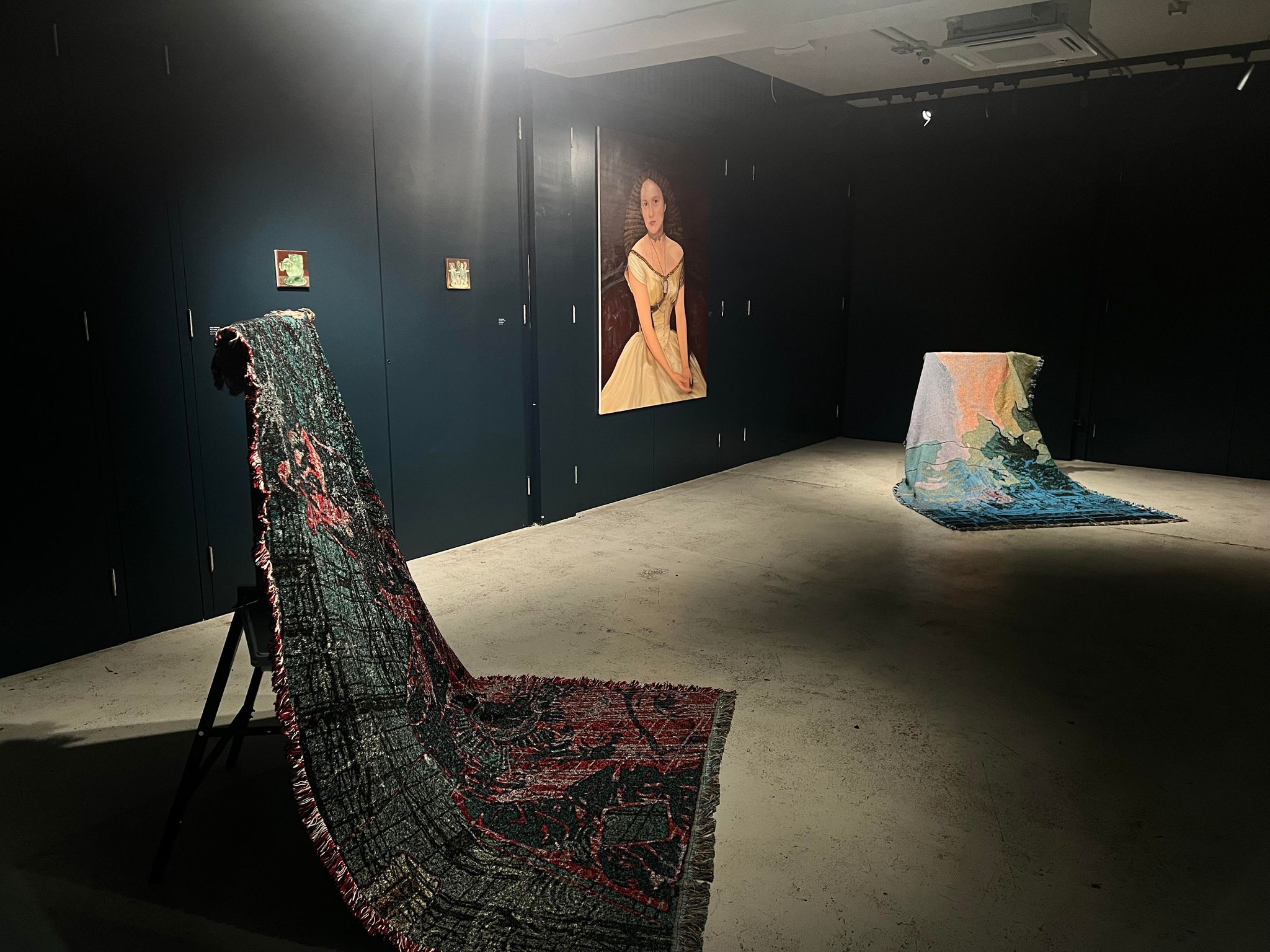
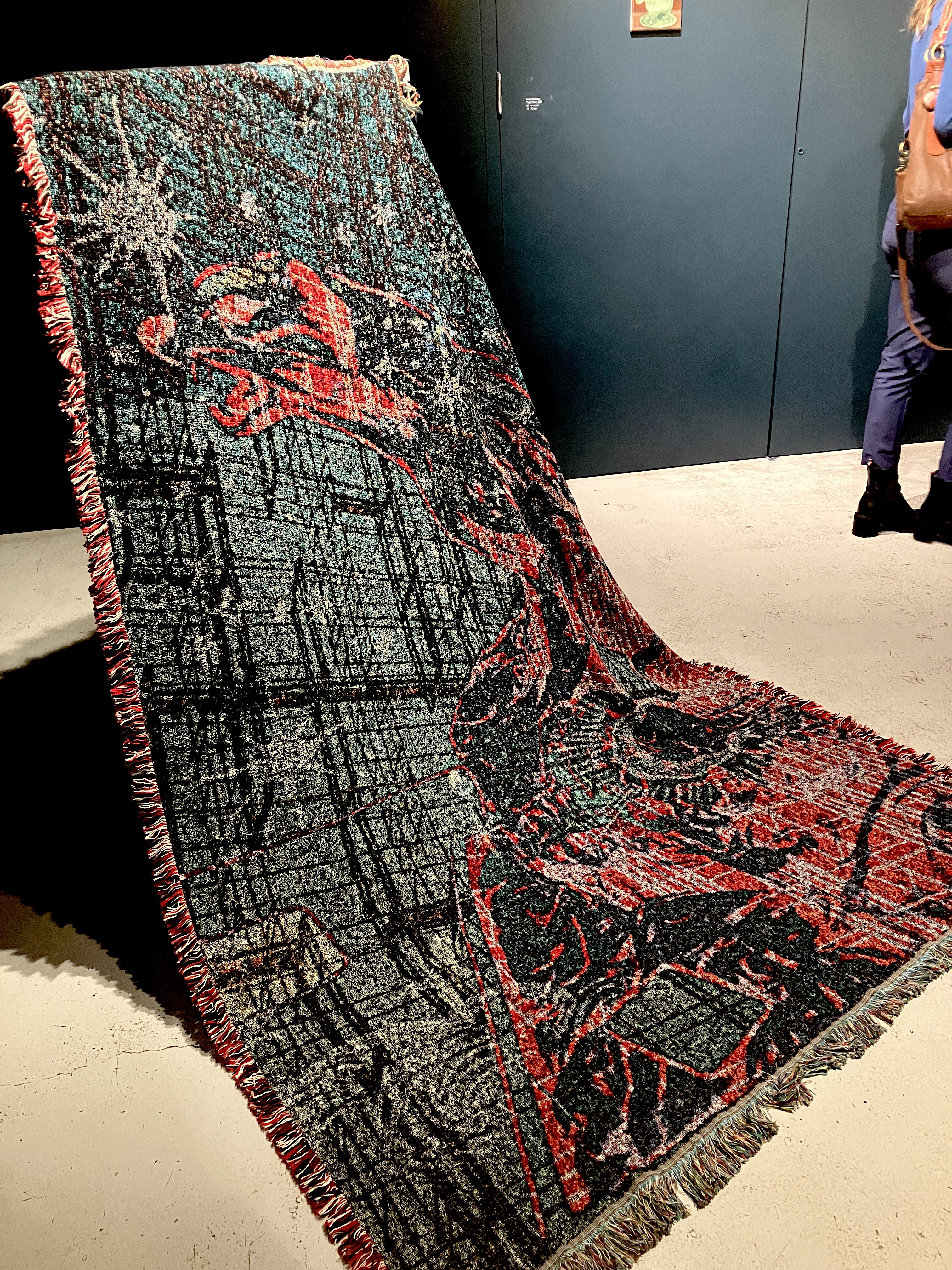
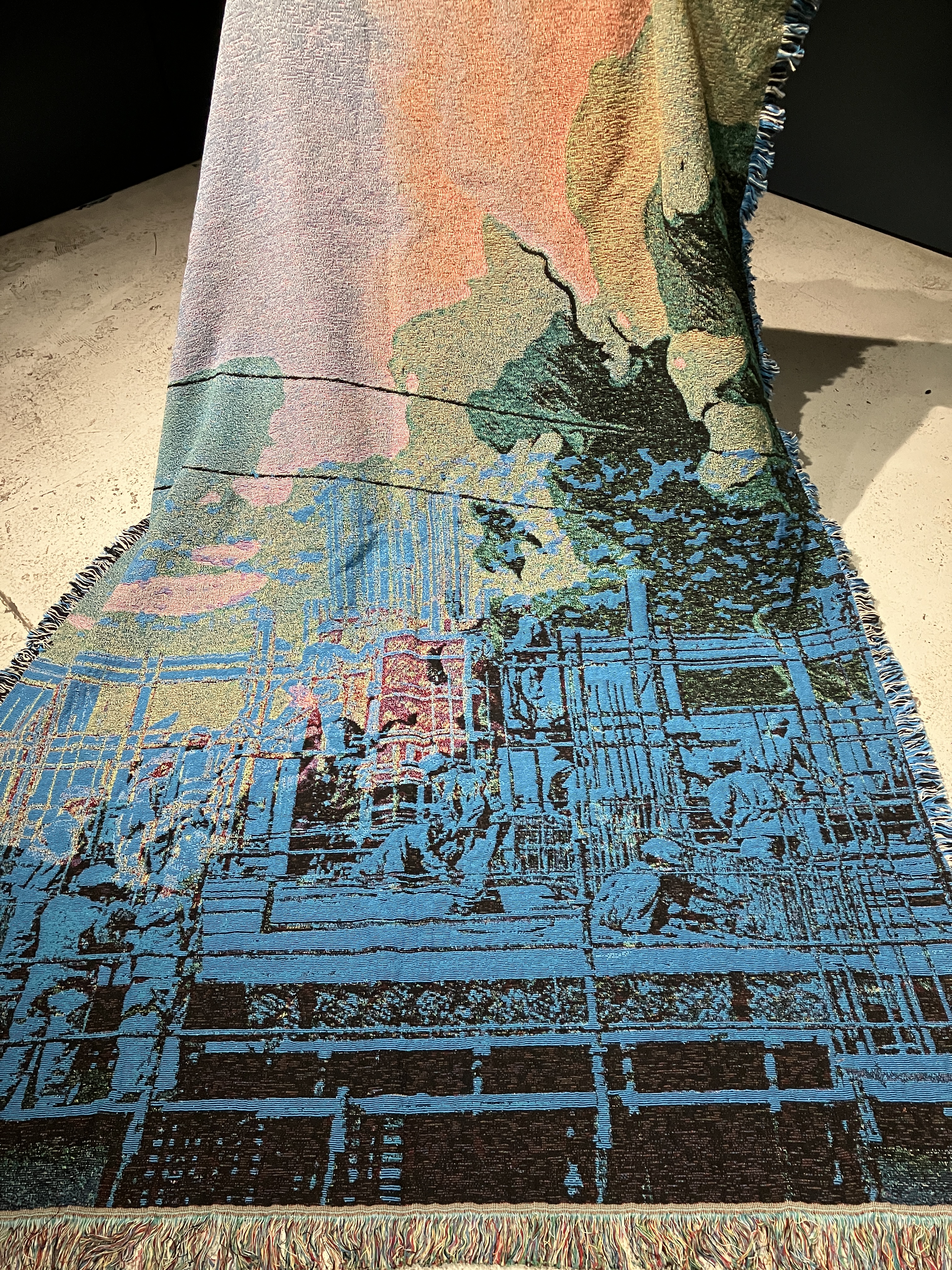
Marianne Fahmy presented two large and beautiful jacquard woven rugs. Fahmy is not a ‘textile artist’ per se. She works across media with a strong emphasis on film, photography, and archival images. Her jacquard work is fascinating, as she brings archival imagery to life in a wholly different and culturally significant material- the rug. In jacquard weaving, the pattern and colours are incorporated into the weave instead of being printed or dyed onto the fabric’s surface. The looms can capture the intricate detail of a photograph into individual threads; the many thousands of colours in a photograph can be condensed to generate tonal value by applying a different weave or colour. Fahmy’s gorgeously coloured rugs were presented draped elegantly. This was a surprising and evocative way to present the pieces, which would typically, I think, have been hung on the wall. By draping them, the haptic qualities and the richness of the jacquard weave was much more tangible. And it made the space seem like someone had just put them there and then left the room – like a moment in a domestic space.
The feeling of being suddenly in a private domestic space was extended by Nada El Kalaawy’s paintings and small tapestry. Initially trained as an architect, El Kalaawy went on to do her MFA at the Slade and is a multi-award-winning international artist whose star is steadily rising. In this exhibition, she presents one large painting, The Amulet, which depicts a young Egyptian woman sitting – a little – stiffly and nervously wearing an elegant party dress.
Secrets and Dreams
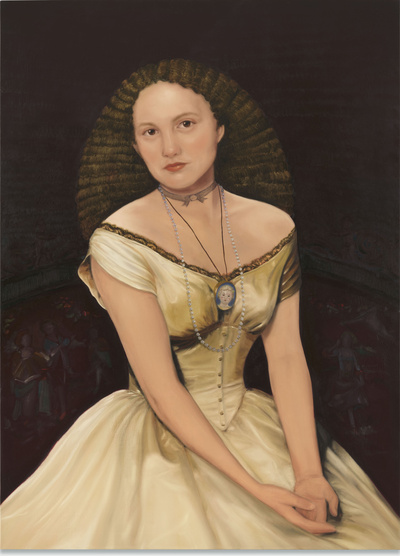
She wears an old, perhaps precious amulet around her slender neck. She seems to be waiting for something or someone. She is vulnerable and young but we sense her strength. Possibly, she gains some strength from the amulet, which was passed down to her by generations of women before her. We sense that she has some secrets, perhaps barely constrained ambitions and desires that she is holding back for this moment but which she will soon set free.
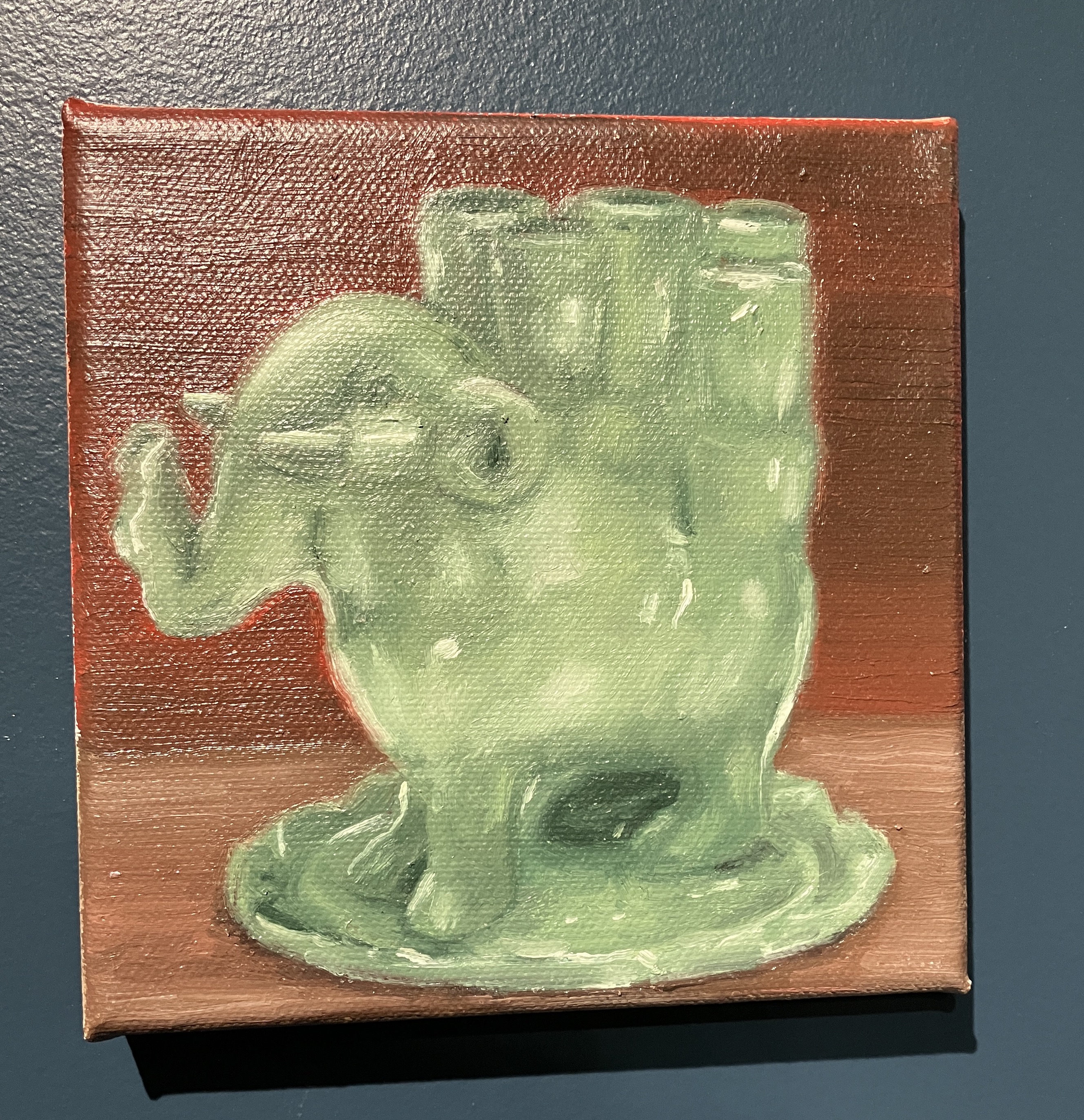
Smaller paintings surrounding The Amulet. The tiny (15×15) The Carrier is a little glass ornamental elephant vase, of the kind seen in traditional middle-class households since the early 20th century. Before the ubiquity of IKEA, most people had idiosyncratic knicknacks in their homes, often inherited. By isolating and depicting these trivial objects through painting, El Kalaawy re-evaluates them and assets that they are, after all, primary carriers of memory. Another small piece – Death Stare – is an extreme close-up of a porcelain doll face, which is deliciously creepy and cute. It is of course objects like this that come to use in our dreams, long after we last set eyes on them in the distant past. El Kalaawy’s still lifes – more can be seen on her website – breathe new vigour into the still life, an unjustifiably overlooked genre.
When women make art that addresses domesticity, it’s sometimes seen as boring and evidence of her being trapped, yet when Velasquez paints an old woman frying eggs, it’s a work of genius – which it undoubtedly is. The way these two artists present the domestic is complex and archaeological. Fahmy’s jacquard rugs and El Kalaawy’s paintings of the ‘trivial’ decorative things found within the home are presented here as an ‘archaeology of knowledge’ (to steal a phrase) about middle-class Egyptian life not only today, but over the past several hundred years, and looking toward a future where the question of cultural identity and the space of humanity are ever more in question.
Interview with Hanya El Ghamry
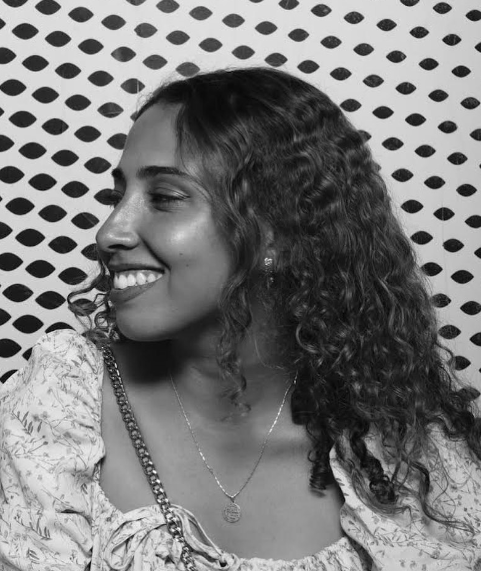
I did a short interview with curator Hanya ElGhamry. El Ghamry has been a curator in Cairo since she graduated from the American University of Cairo, working on the Pyramids exhibitions for Arte d’Egypte. She moved to London to do her MFA at Central St Martins and has been active in curating and co-curating since then. ‘Tale Tonic’ is her first solo curatorial project.
When I asked her to do an interview about the show, El Ghamry was quick to point out that, in any exhibition, the curator is never the ‘star’. The artist is the star; the curator is a behind-the-scenes operator. Nevertheless, I can discern El Ghamry’s curatorial vision in the projects she develops. As an artist-curator, she has an empathy for the artist’s position that is not always found in the curator role.
GM:what prompted you to participate in this AWAN festival?
HE. I met Aser El Saqqa in Shoreditch on an evening out with friends. I was talking about Palestine, and he’s Palestinian, and he overheard me, and the conversation led to discovering that we are both in the arts. Then he invited me to participate in AWAN. I’d visited AWAN in previous years. I was delighted to get involved this year. I wanted the opportunity to solo-curate a show of Egyptian art in London.
GM. How does the exhibition fit into the festival?
HE. It’s a showcase of two Egyptian artists one based in Alexandria (Fahmy) one based in the UK (El Kalaawy). Egypt occupies an exciting point in cultural geography. We are absolutely part of the MENA (Middle East and North Africa) region, but the African aspect of Egypt isn’t always acknowledged. So it was interesting to bring this show to Africa House and underline the African aspect of Egypt.
Likewise, the show is a female-led and female-featuring show,.
GM. How and why did you choose these two artists ?
HE. Both are from Alexandria although Nada lives now in the UK she is still active in Egypt. I met her when I was an intern at Gypsum Gallery [a leading contemporary art gallery in Cairo]. Marianne I met in 2019 at a showcase of Arte D Egypte where I work. I fell in love with her as a person and her work. I just really like them both and what they are doing, so I’m leaping at the chance to work with them.
I am interested in how art operates as an agent of soft power, both invoking and shaping memory and cultural identity. I write my MFA thesis on this process. I can see how both Marianne and Nada do precisely this in their work, especially in their representation of women, the problems of cultural preservation the question of how to preserve cultural identity, and the use of archival materials.
GM, when you think of the idea of ‘Arab Women Artist Now, ‘ what does this suggest to you?
HE. Well, it’s me—I’m Arab, I’m African, I’m a woman, and I’m an artist. It speaks so directly to me. The Africa /Arab question rarely comes up; it becomes a talking point over football when we play in the Africa Cup. Are Egyptians Middle Eastern or African? How can we be both? So that is part of it.
I particularly Love the way the festival spotlights so many different aspects of AWAN; it never reports to the cliché. User and the team have encouraged everyone to have their voice, be free, be as political, social and critical as we want. If we want to be if u wish to controversial, that is ok. I can see that we have. a real community here and the festival is a hub.
Egypt so ancient, but it’s not just about that. We’re at the edge of Africa; we’re also very Mediterranean. We participate in many shared cultures. We have a complicated culture, and that is interesting. As women in Egypt now, we are in contact with very diverse people from different backgrounds and are developing things quickly and with a lot of energy. It is good to be part of it.
GM Tell me about your UK Debut as curator
HE. It is a small but very focused show. I felt I had complete control and freedom from the festival and the Africa Centre, with much support. It’s enabled me to explore ideas and work on how to create an intimate show, yet has a feeling of being a stage set, playing with the idea of the theatrical. This is something I want to explore more in future curations.
GM. How would you describe your curatorial vision?
HE. I know what I am interested in: soft power, memory, and cultural identities, and this will constantly be something I showcase and discuss for the foreseeable. As a curator I am primarily interested in the experience of not having a single authoritative interpretation. I want to create instead a space that does not remove the agency of thought from the viewer. I don’t like didacticism in art exhibitions: I want to provide a thinkspace and talkspace, to try to understand and empower audiences, not ’teach them’ anything. One of the great things about experiencing art helps us to understand ourselves, and to deconstruct ideologies. My job must be to provide that space of openness and invite people to explore their subjectivity.
TALE TONIC Exhibition 14 – 30 March
Marianne El Fahmy Instagram
Nada El Kalaawy Instagram
Curator Hanya El Ghamry Instagram
 THE ART TRAVELLER
You must be logged in to post a comment.