Discover the captivating world of spiritual art and its connection to the metaphysical at London’s College of Psychic Studies.

Immerse yourself in the ethereal realm of spiritual art at the College of Psychic Studies in London. Nestled within a Georgian townhouse, this institution is a haven for those seeking to explore the metaphysical and delve into the intricacies of spiritualism. Housing a vast collection of spiritual art, the College offers a unique opportunity to witness the power of artistic expression inspired by the unseen. From the haunting portraits of the deceased to the abstract representations of celestial beings, each piece invites viewers to contemplate the profound connection between the physical and spiritual worlds.
Spiritual art (or ‘spirit art’) is the practice of invoking metaphysical elements – spirits – to inspire and help in the creation of art. The College’s collection includes numerous quite distinct variations on the idea.
Many spiritualist painters claimed to receive inspiration from spiritual beings or the deceased. This can be seen in works that are thought to be made using automated procedures, such as automatic writing or painting. ‘Mediumistic’ art is spiritually inspired by the dead and allows the deceased’s energy to flow through the living. ‘Spirit’ art may not always involve the dead, but it can invoke a variety of spirits. It is distinguished by its ties to spiritualism or esoteric beliefs.
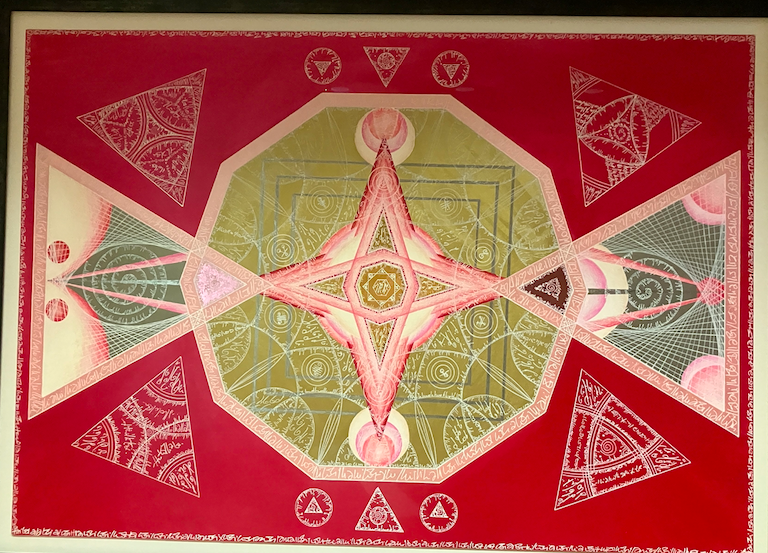
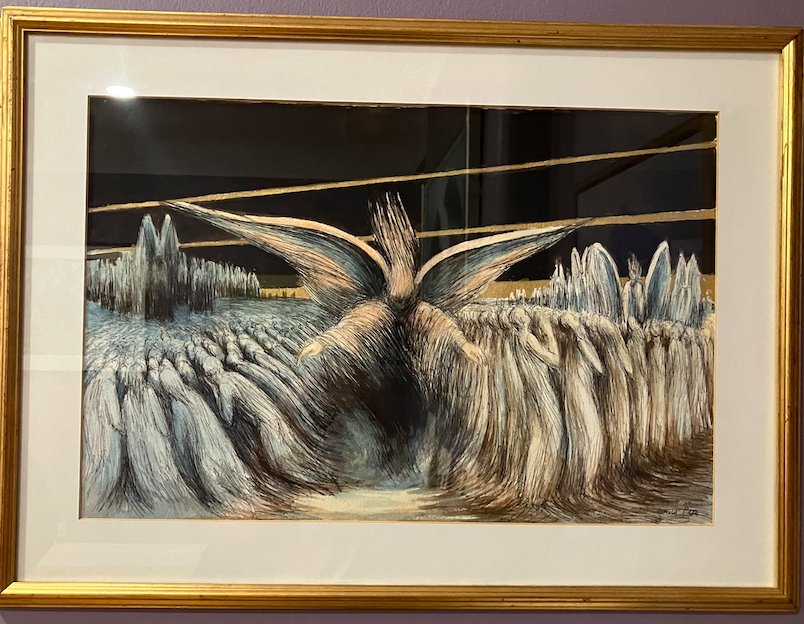
It investigates spirituality, the soul, afterlife, and the relationship between the physical and spiritual realms. This includes images of ghosts, angels, and other ethereal beings and the use of Symbols such as light (indicating the divine or enlightenment), nature and abstract imagery that suggests transcendence or higher consciousness.

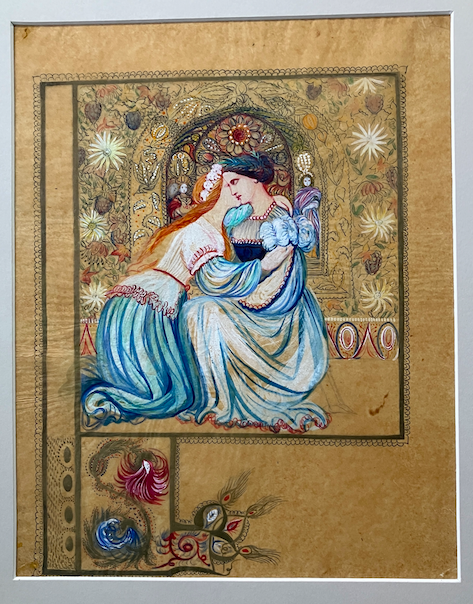
Spirit art frequently expresses strong emotions, addressing subjects such as loss, sadness, hope, and the human experience of mourning loved ones. Artists sometimes made portraits of imaginary people or those who had died, aiming to capture their essence or give a feeling of their continuous presence in the spiritual realm. The emotional intensity is intended to touch viewers on a personal level. Many of the collection’s works have an ethereal or dreamlike quality to them, with soft colours, flowing patterns, and ambiguous spaces that inspire a sense of the otherworldly or magical.
Nature, unsurprisingly, plays an important role in spirit art, frequently representing the relationship between the earthly and spiritual. Trees, water, and heavenly bodies are common subjects in pictures. While spirit art and the occult are not inherently linked, you can sometimes distinguish components of the occult and other esoteric traditions that strive to understand the universe’s invisible forces. Artworks may also depict acts or rituals, emphasising the collective side of spiritualism.
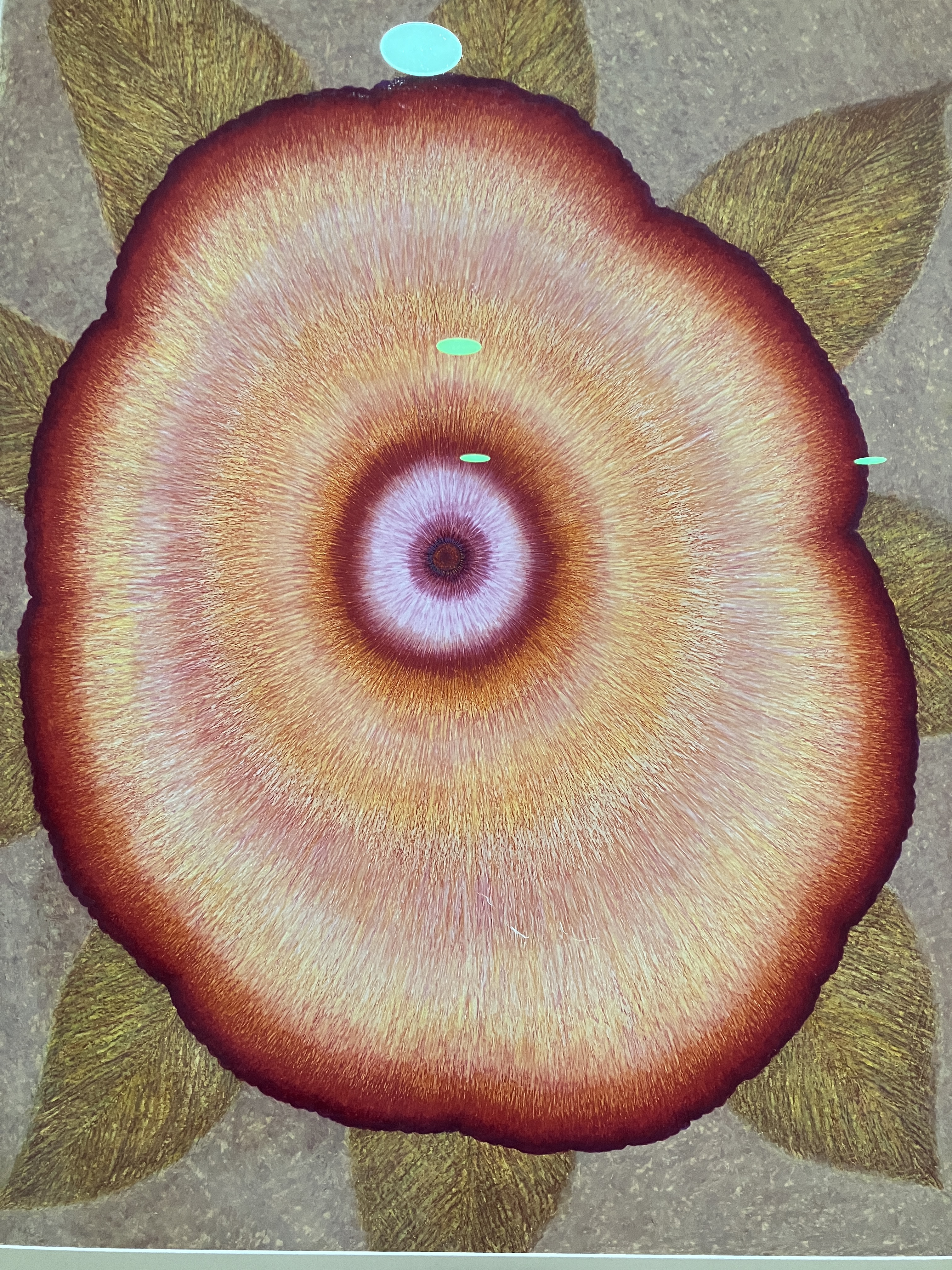
In the Collection, I was particularly fascinated by the work of Ethel le Rossignol, Baron Arild Rosenkrantz, Georgina Houghton, and Anna Howitt Watts.

What exactly is spirit drawing and painting?
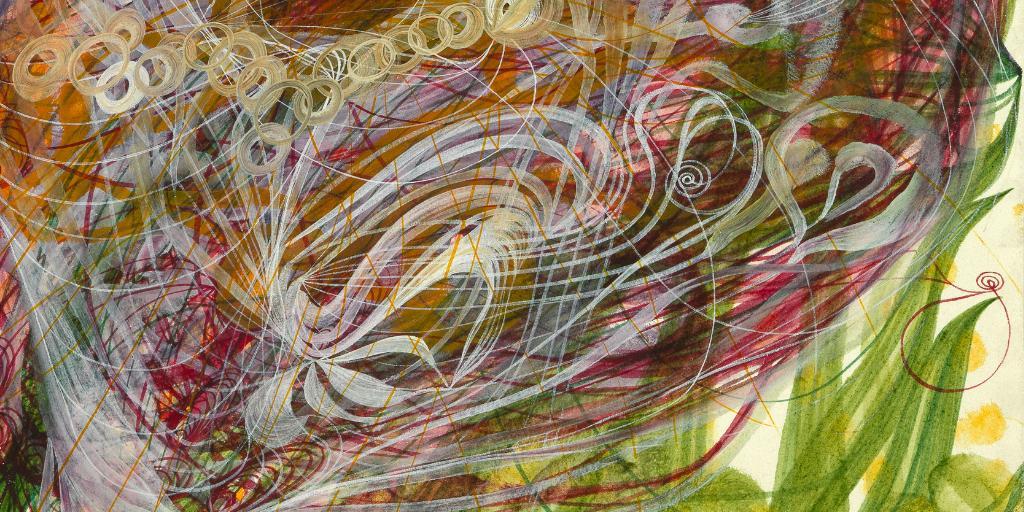
Spirit drawing and painting are mainly done with traditional instruments. The artist becomes contemplative and lets spiritual energies or spirits guide their hand. It is extremely comparable to the later Surrealists’ more psychoanalytically focused ‘automatic sketching’. The finished drawings typically contain pictures, patterns, or symbols that the artist was not aware of or able to control. The artist believes that the artwork allows spiritual energies or entities to express and communicate with one another.
The College’s collection is diverse and covers artworks made at the time of its foundaton, to very new conemptary works. When i was there, I saw THE ORDER OF THE SUN AND MOON, a temporary exhibition by the chaos magician and artist Julian Vayne with Kate Southworth & Greg Humphries,featuring a room full of mystical practices including sigil magick, psychogeography, sacred landscapes, and alchemy.
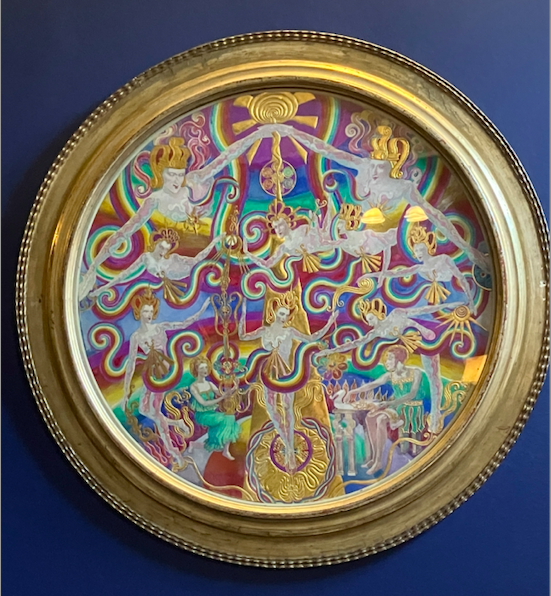
Georgiana Houghton, a founding member of the College in 1884, is most likely the collection’s ‘star’ artist. The College has seven spirit drawings by Houghton, dating from 1866. The art world has “discovered” her breathtaking abstract watercolours. Houghton was a pioneer in ‘spirit photography,’ which involved taking photographs that claimed to demonstrate the presence of ghosts or spirits. It comprises taking photographs at allegedly haunted locations or under specific conditions in the aim of capturing odd images that could be misinterpreted as paranormal beings. Spirit photography was popular from the 1860s to the 1930s, and the College has a large collection of works by all the main artists of the time. Whether or not you believe in the existence of spirits in the photos, they are nonetheless fascinating and engaging.
Houghton’s color symbolism was very powerful and predates Kandinsky’s excellent book Concerning the Spiritual in Art – read about her schema here: https://georgianahoughton.com/drawings/

Houghton’s abstract works were created fifty years before Wassily Kandinsky made his artistic breakthrough. Abstract art is most commonly associated with Kandinsky and other early twentieth-century figures. Houghton, like Swedish artist Hilma af Klint (1862-1944), is now recognised for his contribution to the early development of abstraction. Artists, particularly women artists, backed the early spiritualist movement in Victorian England. Female painters faced significant challenges in gaining attention and respect in the late nineteenth and early twentieth centuries art scenes. Spiritualism, I believe, allowed them to share and sell their work, whereas the mainstream art industry did not. But that doesn’t imply I disagree with their spiritualist outlook. It’s only that, as the Tate Modern exhibition on the Blue Rider Group shows, women had a much harder time being recognised as serious, even profound, artists than spiritually orientated painters like Franz Marc and Kandinsky.
“ARTISTIC ABERRATION?
The art world’s misogyny weaves a truly heartbreaking tale. Houghton, a fiercely talented and trained, dedicated artist, bravely showcased 155 of her haunting spirit drawings in 187, securing an elegant gallery on Bond Street. While The Era newspaper hailed it as “the most astonishing exhibition in London at the moment,” The Daily News dismissively labeled it “the most extraordinary and instructive example of artistic aberration,” likening her creations to “tangled threads of coloured wool.” Despite her meticulous curation and a beautifully crafted catalogue, the exhibition became a financial catastrophe, threatening to engulf Houghton in despair.
Yet today, the ‘spirit art’ of yesteryear, including Houghton’s masterpieces, is finally being celebrated as authentic art rather than an oddity from a bygone Victorian era. Remarkable artworks imbued with esoteric or mystical qualities are gradually shedding the label of ‘aberration.’ Contemporary female ‘esoteric’ painters like Hazel Florez, Emma Watkinson, Melissa Shemanna, Cathy Ward, and others are emerging from the shadows, recognized not only as skilled artisTs but as the new pioneers of the metaphysical. From an art historical perspective, it is imperative to reintegrate at least a portion of the College’s extraordinary collection into the broader narrative of art history.
Visit The College of Psychic Studies, Wednesdays & Fridays, 11am-4pm. 16 Queensberry Place, South Kensington, SW7 2EB


 THE ART TRAVELLER
You must be logged in to post a comment.