Tucked away in the heart of Hampstead Village, Burgh House is a hidden gem that often escapes the tourist trail. This historic Queen Anne-style house, once a private residence, now houses a fascinating collection of artifacts and hosts captivating exhibitions.
During a recent visit, I was pleasantly surprised by the beauty of the house itself and the intriguing exhibitions on display. From Sue Smethurst’s serene landscapes to Dorothy Bohm’s poignant photographs, Burgh House offers a delightful journey through art and history.
In this blog post, I’ll share my experience exploring Burgh House and its current exhibitions. I’ll also delve into the history of this remarkable building and its significance to the Hampstead community. If you’re looking for a unique cultural experience in London, Burgh House is definitely worth a visit.
Since early summer, I’ve remained in the same areas of London, alternating between Hackney and Holborn. I haven’t had very many reasons to go elsewhere. Yesterday I decided to change that. I took the screechy Northern Line Tube to Hampstead Heath. The heath was as lovely as usual, but instead of walking all the way up to Kenwood House, as I have done many times, I decided to snoop around Hampstead village, which led me to Burgh House for the first time.

Burgh House is a Grade I listed Queen Anne-style (built 1704) house in the middle of Hampstead Village, at the end of picturesque Flask Walk. The house was a private home for most of its history but in 1937, the last residents departed, leaving the house empty. After the War it became a community centre. However, by 1979 it was empty and derelict until a local group saved it from demolition. Burgh House is now a museum with an interesting collection of artifacts related to the house’s past, the neighbourhood, and the interesting people who lived there. Thanks to many gifts from people, local businesses, and artists, the collection now has almost 5,000 items. It’s a lively place to learn about Hampstead’s artistic and literary history.
The house is really charming, and although it doesn’t have an interior faithful to the period of its construction anymore, it has retained many period features. Just being inside this beautiful bit of architecture is a wonderful experience. And I was lucky – there were three fascinating exhibitions on show, all by women artists.
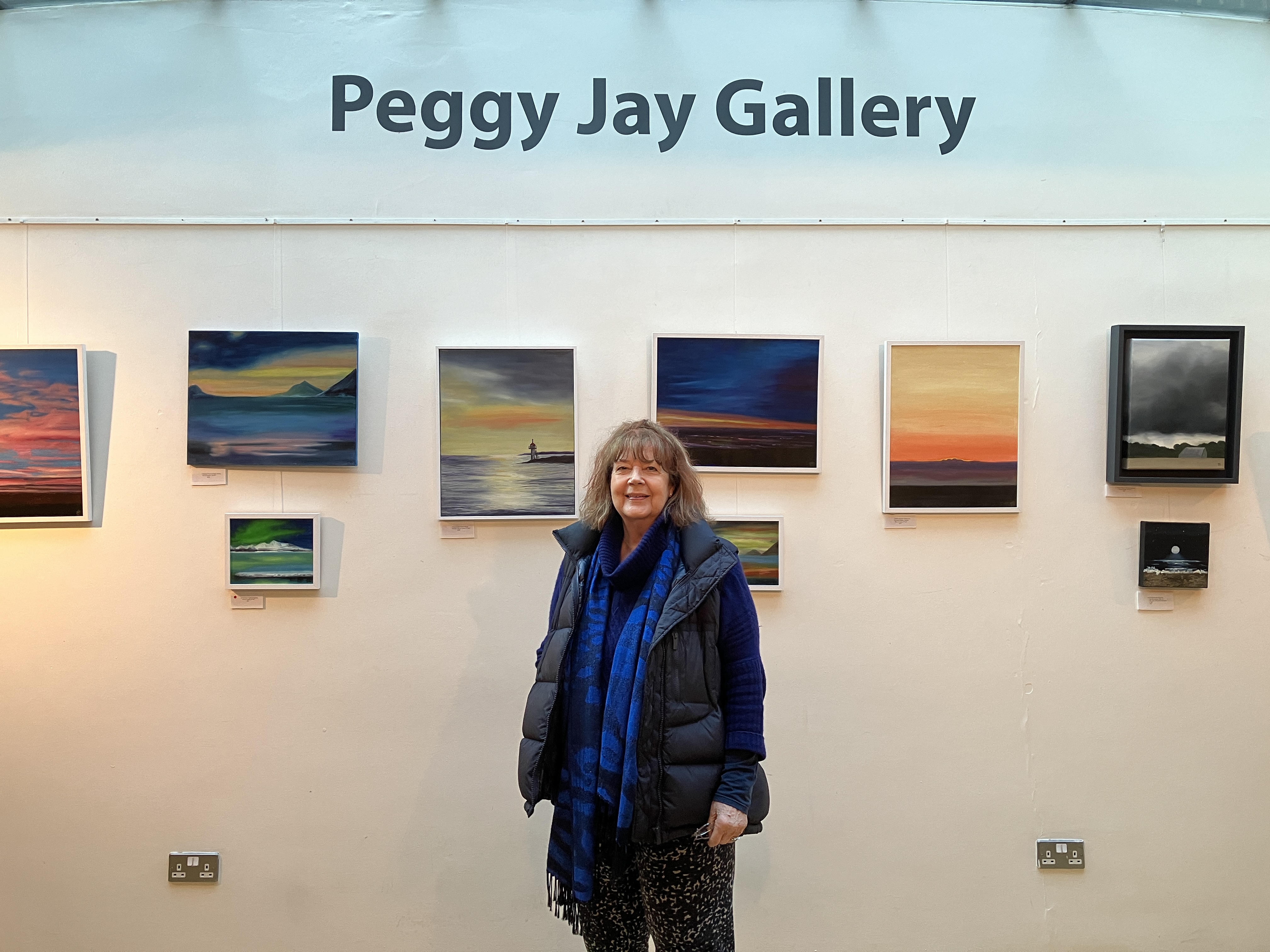
In the purpose-built and very attractive ground-floor Peggy Jay Gallery, I saw Elements, an exhibition of paintings by local contemporary artist Sue Smethurst. These are a selection of very beautiful acrylic-on-canvas landscapes, which were very immersive and pulled the viewer right into these depopulated, exquisitely colored, and highly meditative vistas. I’ve often thought that landscape painting is underrated, and indeed, it has been underrated for much of its history. It’s true that landscape painting doesn’t have the grandiosity of history painting or the curiosity-satisfying aspect of portraiture; it does something else. Landscape painting transports us from our current location to a more beautiful, appealing, exciting, or sublime place. I love the landscapes of Rubens, de Loutherbourg, Turner, and Palmer—to name a few. Smethurst’s landscapes are quiet, empty of humans, even unassuming in their calmness, but nevertheless they convey the grandiosity of the natural world as a setting, a vista. I really liked Susan Smethurst’s paintings, and I bought a tiny one for myself, thinking that it would be a perfect image to contemplate. You know, when you’re indoors, gazing intensely at an image of nature can be extremely restorative.
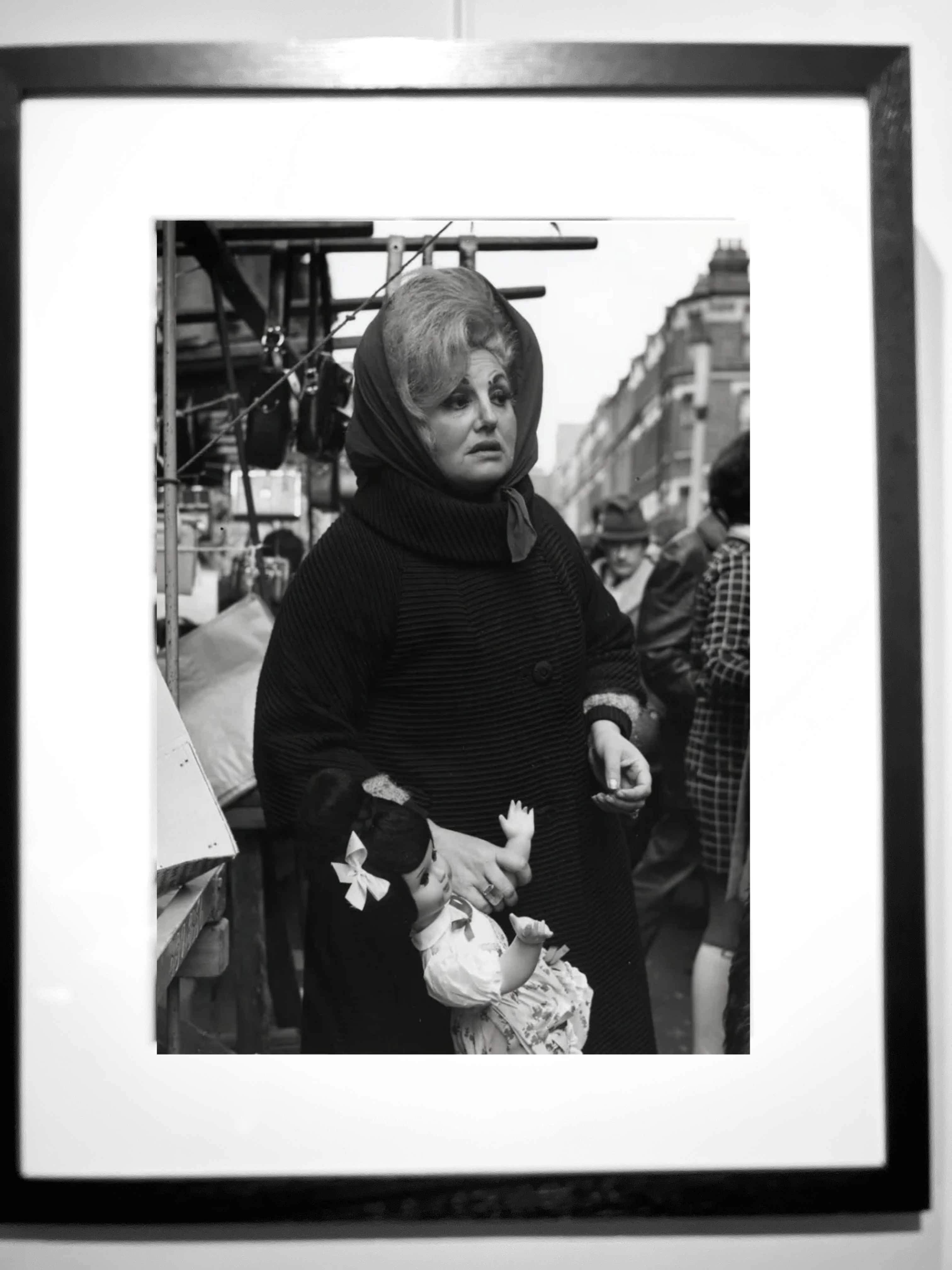
“My idea was to portray women so that viewers could see what I could see—that women were changing.” Dorothy Bohm
The exhibition “About Women: Photographs by Dorothy Bohm” was waiting for me upstairs. This exhibition, which is part-time travel and part sober reflection on women’s lives in the 20th century, is joyful and fascinating. In the 1950s, Bohm (1924-2023), a resident of Hampstead, captured intimate and genuine photographs of ordinary women in her neighbourhood and throughout London. As the 50s turned into the 60s, 70s, and beyond, Bohm was there, seeking out and finding the quiet moments of women’s lives, right up until her death last year. Bohm took personal, honest pictures of women around the world for more than seven decades, showing how their lives changed. This show—marking the 100th anniversary of her birth—is the first to focus on Bohm’s warm, funny, and powerful portrayals of women.
Dorothy Bohm fled Nazi Germany as a child and came to the UK in 1939. Monica Bohm-Duchen, Dorothy’s daughter and an art historian who specialises in 20th-century art, co-curated the show. She is also the co-editor of Rubies and Rebels: Jewish Female Identity in Contemporary British Art (1996), as well as books about Charlotte Salomon and Chagall, among others. This fascinating exhibition is a fitting tribute to her mother’s work.
There is an excellent website about Bohm: https://dorothybohm.com/.

Despite my saturation with thought-provoking and beautiful art at that point, I persevered and entered Marie-Louise von Motesiczky’s Expressionist chamber and her exhibition, Visible Women. I was vaguely familiar with the name of Marie-Louise von Motesiczky, but I wasn’t familiar with her work until I realized I had seen it before and liked it. The Fitzwilliam Museum, the Stedelijk, various museums in her native Austria, the National Portrait Gallery, Tate, and Burgh House’s own collection all hold her work.
In a letter to her lover, Elias Canetti, von Motesiczky expressed her desire to create a painting depicting “women aging—women at the hairdressers—girls sitting in glass-fronted shops doing the invisible mending and slowly getting older—dying women, bathing women, cheerful women, sad women…”
Living in Hampstead since 1960, von Motesiczky had a large circle of artisitc and literary friends, including Canetti and Oskar Kokoschka, and though she did. not sell her paintings or inhabit the world of art exhibiting, she was respected and appreciated as an artist. Her work is intimate and empathetic. (in)Visible Women’s paintings have tremendous vitality and strength. They give a visible presence to the daily lives of women. She depicts women as friends, lovers, and carers. She shows them at home and at work. Some of the most affecting are her pictures of her mother, with whom she lived and cared for all her life. Despite their honesty and authenticity, they transcend expressionist realism, incorporating imaginary scenes, mental landscapes, and playful explorations of inner sensations. Above all, these (in)visible women’sare poignant, clever, and occasionally disturbing.
Unfortunately, she has been a bit underappreciated until recently, like many British female painters from the past. Fortunately, the Marie-Louise von Motesiczky Charitable Trust has been doing a fantastic job in getting her work seen and seeking the recognition she shied away from during her life.
Burgh House is not just a museum; it’s a journey through time and art. It offers a glimpse into Hampstead’s past and present. From the beautiful building to its art collection and temporary exhibitons, there’s something for everyone.
I’m glad I allowed myself to discover this hidden treasure of Hampstead, and even more glad I can share it with my readers. So, what are you waiting for? Subscribe to The Art Traveller for more art adventures and cultural insights in London and beyond.
Elements Until 24 November 2024
About Women: Photographs by Dorothy Bohm until December 15, 2024
Marie-Louise von Motesiczky: (in) Visible WomenUntil 15 December 2024
 THE ART TRAVELLER
You must be logged in to post a comment.