Unraveling the Evolution of Tarot at the Warburg Institute
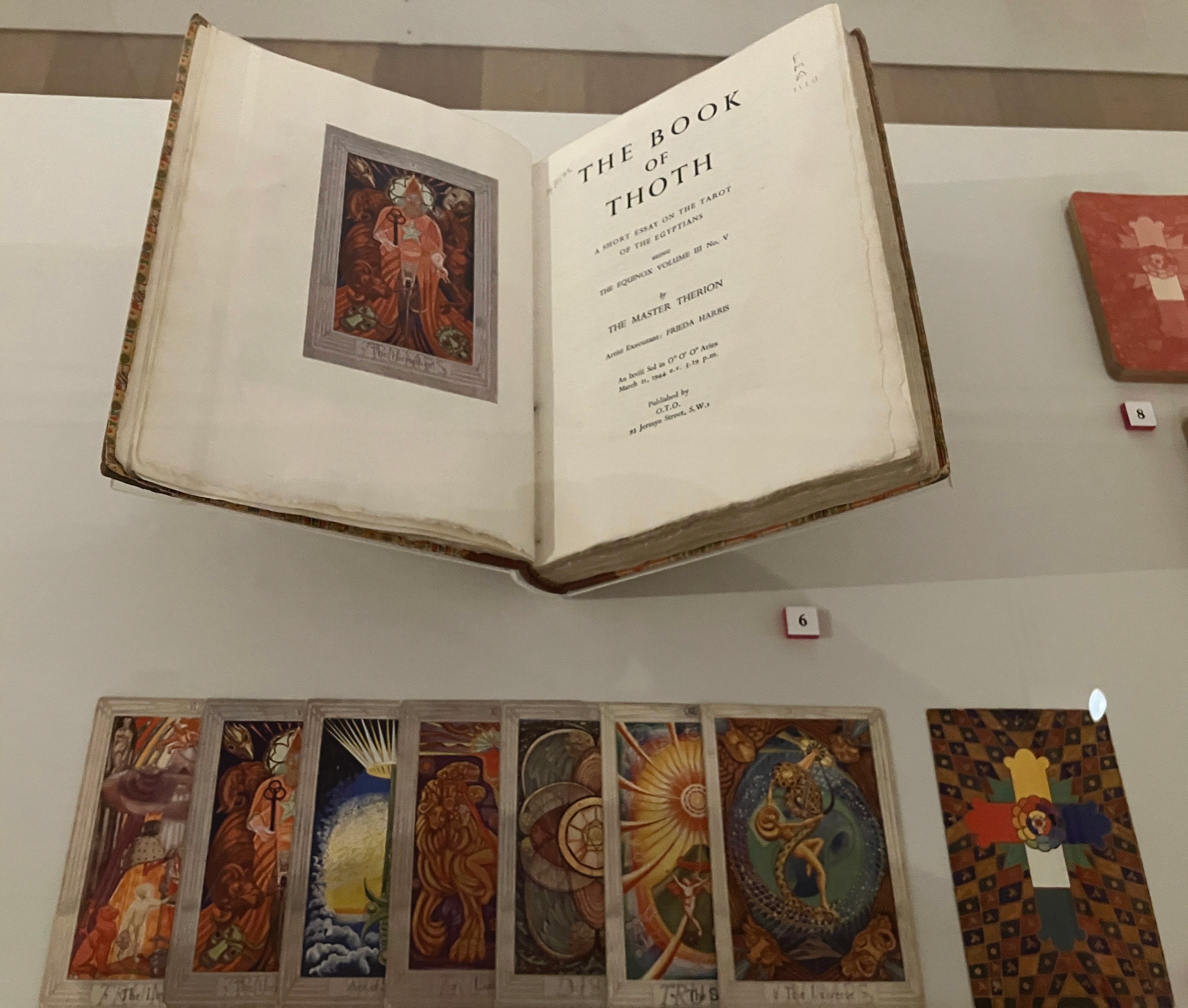
Tarot – Origins & Afterlives | Warburg Institute, Woburn Square, London WC1H 0AB | 31 January – 30 April 2025
Tarot cards have regained popularity, and they appear to be everywhere. The frequently beautiful, vibrant and fascinating cards have a complicated past, almost as contentious as the claims made about their power to ‘predict’ futures. But what is tarot, and where did it come from? Why are there so many decks? Are the cards only instruments for exploring the unconscious, or do they have their own magical powers?
The Warburg Institute, a research institute at University College London, has clearly raised these questions, if not promised specific answers. Tarot – Origins & Afterlives does not attempt to provide a comprehensive history, but rather presents key moments from Tarot’s long history through the display of decks, individual cards, and reproductions on lightboxes, exploring deep into the cards’ origins, iconographies, and the ways that artists and mystical practitioners have used and transformed them.
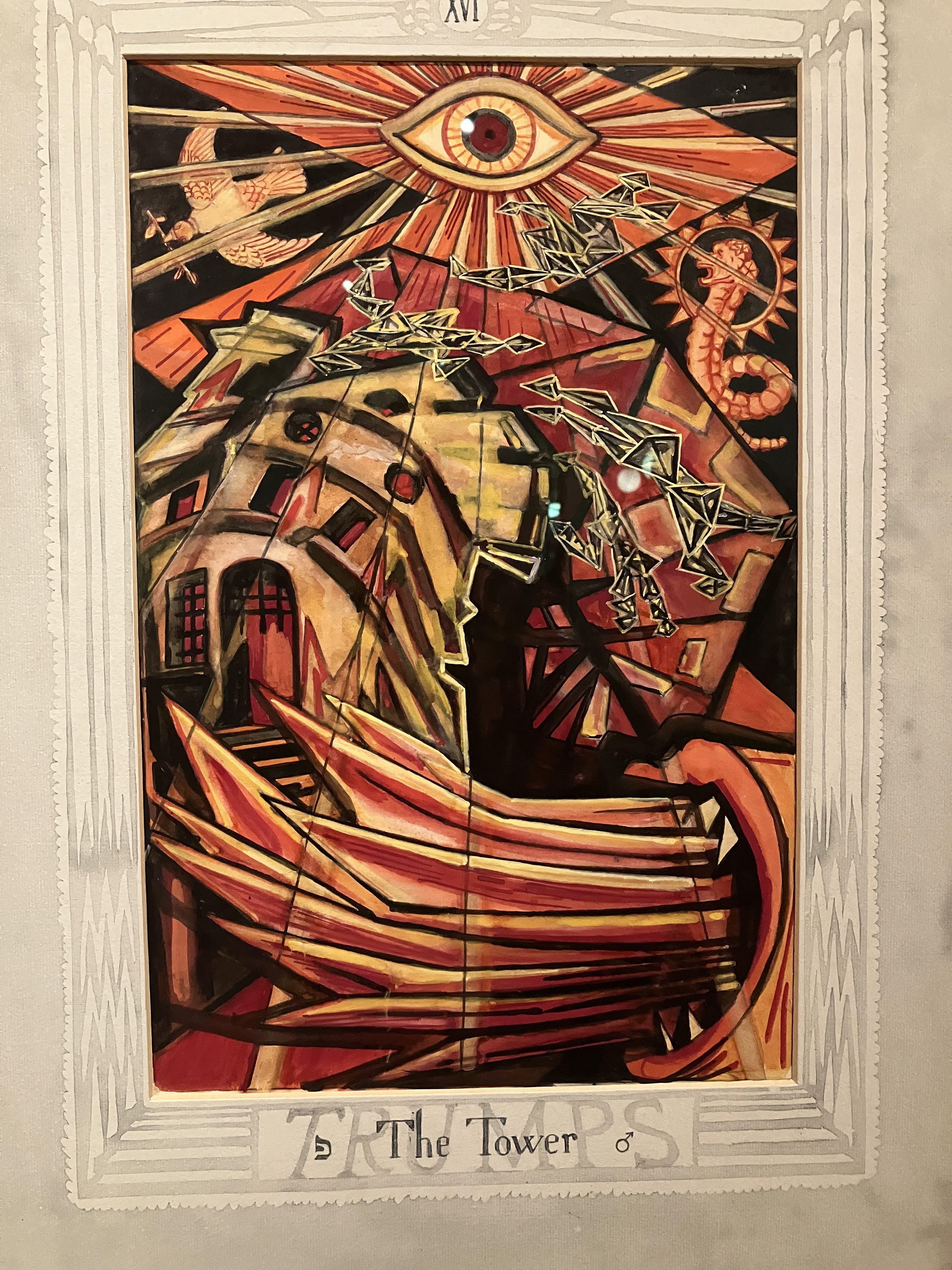
Warburg shows the early cards of the Italian Renaissance, the Egyptomania of the Order of the Golden Dawn, Aleister Crowley and Frieda Harris’ stunning Thoth Deck, and the freshly published deck of chaos magician Austin Osman Spare. Rather interestingly, author Italo Calvino appears in the show via his book The Castle of Crossed Destinies (which I now MUST read!). You can also see Suzanne Treister’s modern HEXEN decks, which require thorough scrutiny. It is fascinating to trace the way different eras and different artists have interpreted the Major and Minor Arcana and the pictographs of the cards.
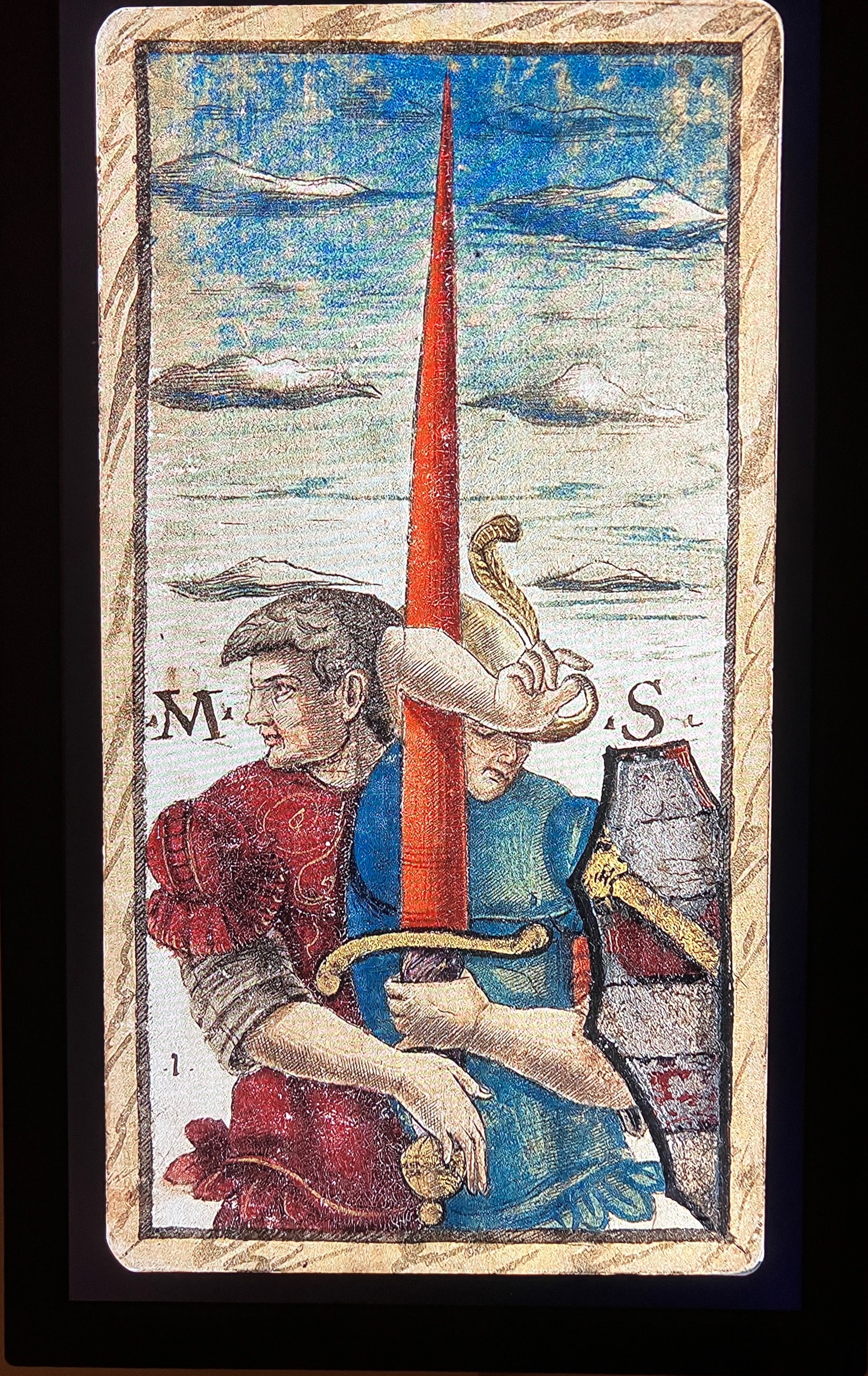
There are various theories about where the Tarot originated. The most pervasive one is that it is somehow Ancient Egyptian. While there is no hard evidence so far, that does not mean it’s impossible. Indeed, the Egyptians’ sophisticated systems of image-making and symbolism suggest a link – but that may be very tangential. What is not disputable is that Egypt was long seen in Europe as the place where alchemy and magic originated. So it’s possible that there was a system of symbols in use and that the tarot derives from that. But again, with no clear evidence, we cannot say. What we do know if that they were first seen in Europe in Renaissance Italy in the 1440s and 1450s in the region surrounding Venice, Milan, Florence, and Urbino. Those early cards are gorgeous. However they were used to play a game called Tarocchi. The present-day association of tarot with fortune-telling and the occult gained popular currency only in the 19th century and so far as we know, has nothing to do with the Renaissance-era cards.
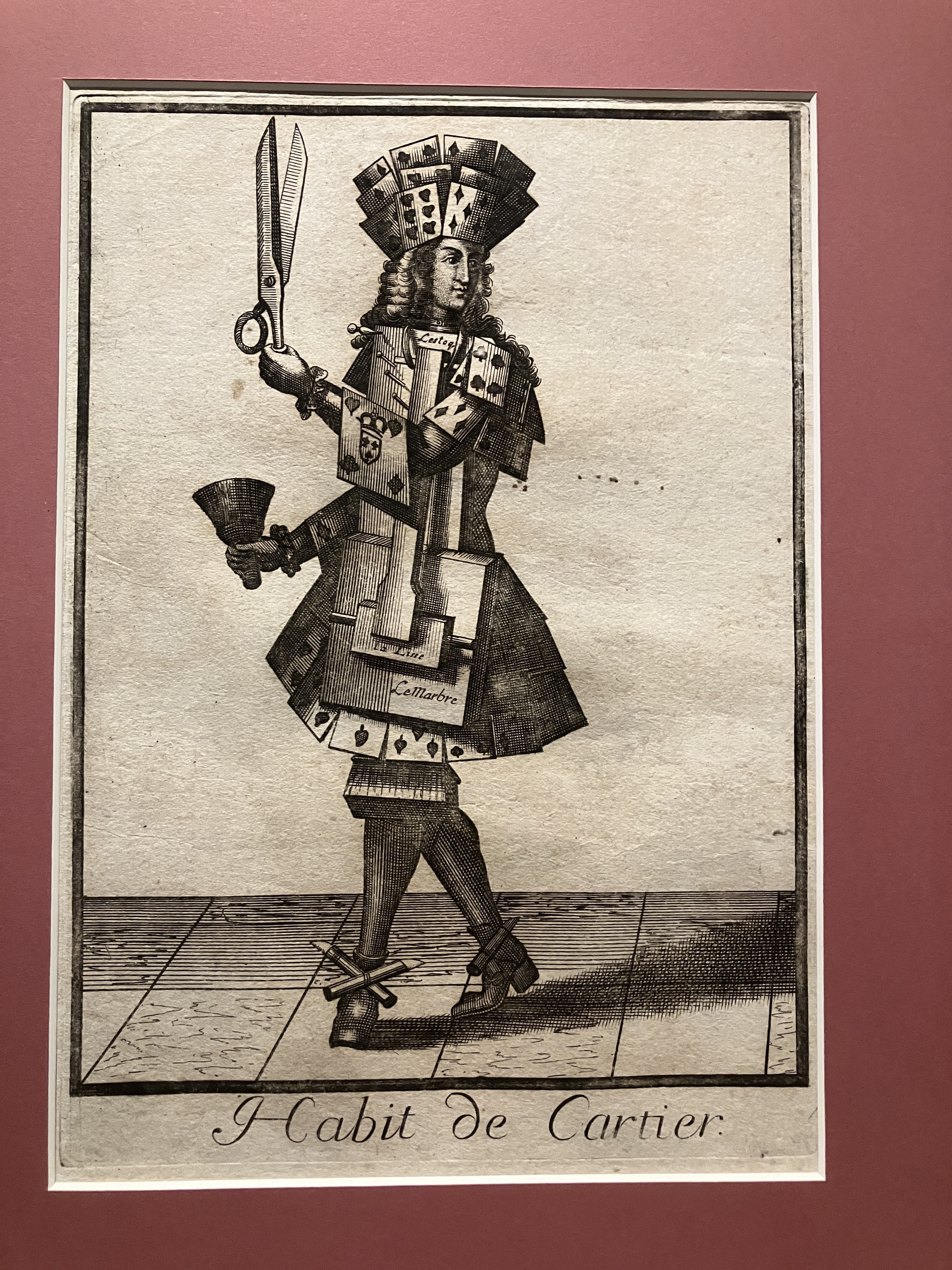
The use of tarot cards for occult and fortune-telling purposes was first documented in France around 1780, but probably began decades earlier. For fortune telling, each tarot card is assigned a significance. The cards of the major arcana denote spiritual matters and significant patterns in the querent’s life. Wands in the minor arcana relate mostly to business and career goals, cups with love, swords with conflict, and coins with money and material comfort. The questioner shuffles the tarot deck, and the reader arranges a number of the cards in a unique pattern known as a “spread.” Is this magic, ‘fortune-telling- or a kind of psychology? Maybe all three.

This little yet densely packed presentation is rewarding. Whether you’re interested in tarot as art history, social history, or a Tarot practitioner yourself, the show is a must-see. In fact, the show has proven to be extremely popular (which is unusual for a rather obscure academic research facility).
I collect tarot cards myself, so the show was a super experience for me, but clearly, everyone there- including the friends I brought with me – just loved it. I think there is scope for more and broader explorations of the art of the cards. Artist Hazel Florez, for example , creates gorgeous Tarot-inspired art work.
Modern decks are being made all the time. Just yesterday at the Other Art Fair I met an artist, Sophie Dunster, who creates bespoke cards and decks.

Tarot – Origins & Afterlives is free and open till the end of April. It is a good way to spend an afternoon, especially if you combine it with the nearby Petrie Museum of Egyptology.
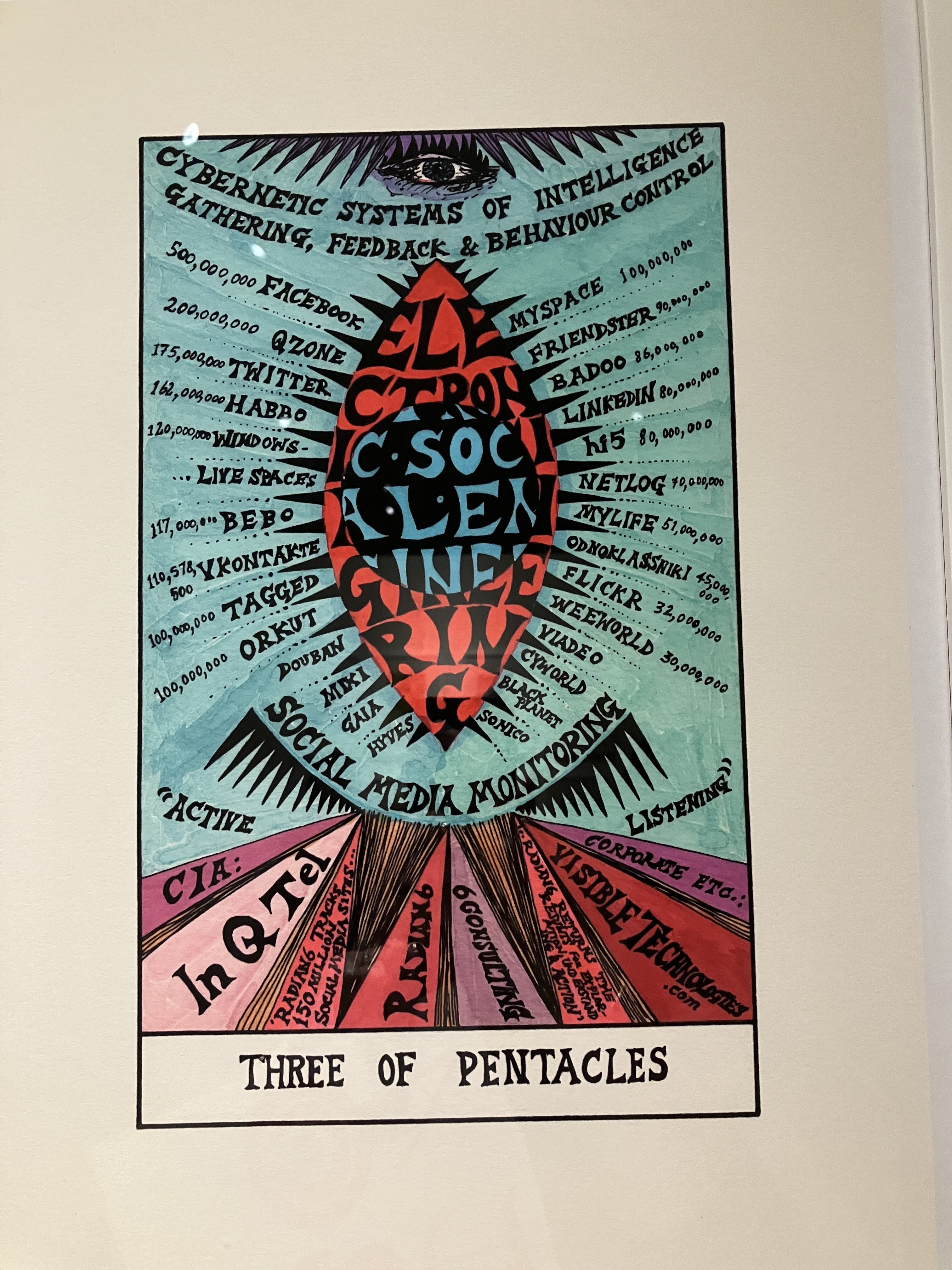
Suzanne Treister will be exhibiting Hexen at HEXEN 5.0, Annely Juda Fine Art, London, England
(21 March – 3 May 2025)
 THE ART TRAVELLER
You must be logged in to post a comment.