“Ancient India: Living Traditions” at the British Museum showcases over 180 objects that highlight the influence of ancient nature spirits on Hindu, Jain, and Buddhist sacred art, and how these traditions have shaped modern spiritual practices.

Back to the British Museum, to visit a remarkable exhibition that reached back thousands of years, to explore the origins of Hindu, Jain and Buddhist sacred art. Starting with the ancient and powerful nature spirits of India, the show explainedthe spread of this art beyond the subcontinent. What I found absolutely fascinating was how this was one of the first major exhibitions in the world to examine the early devotional art of India from a multi-faith, contemporary and global perspective. I was lucky to have a friend accompany me who is both Indian and a professional philosopher, so the discussion was electric!
As we walked through the galleries, I was captivated by how the exhibition highlighted the inspiration behind now-familiar depictions of the deities and enlightened teachers of these world religions – and demonstrated how they were shared across the Indian Ocean to Southeast Asia and along the Silk Roads to East Asia. The presentation was engaging, being colourful, multi-sensory and atmospheric, which I learned had been developed in collaboration with an advisory community panel of practising Hindus, Buddhists and Jains.
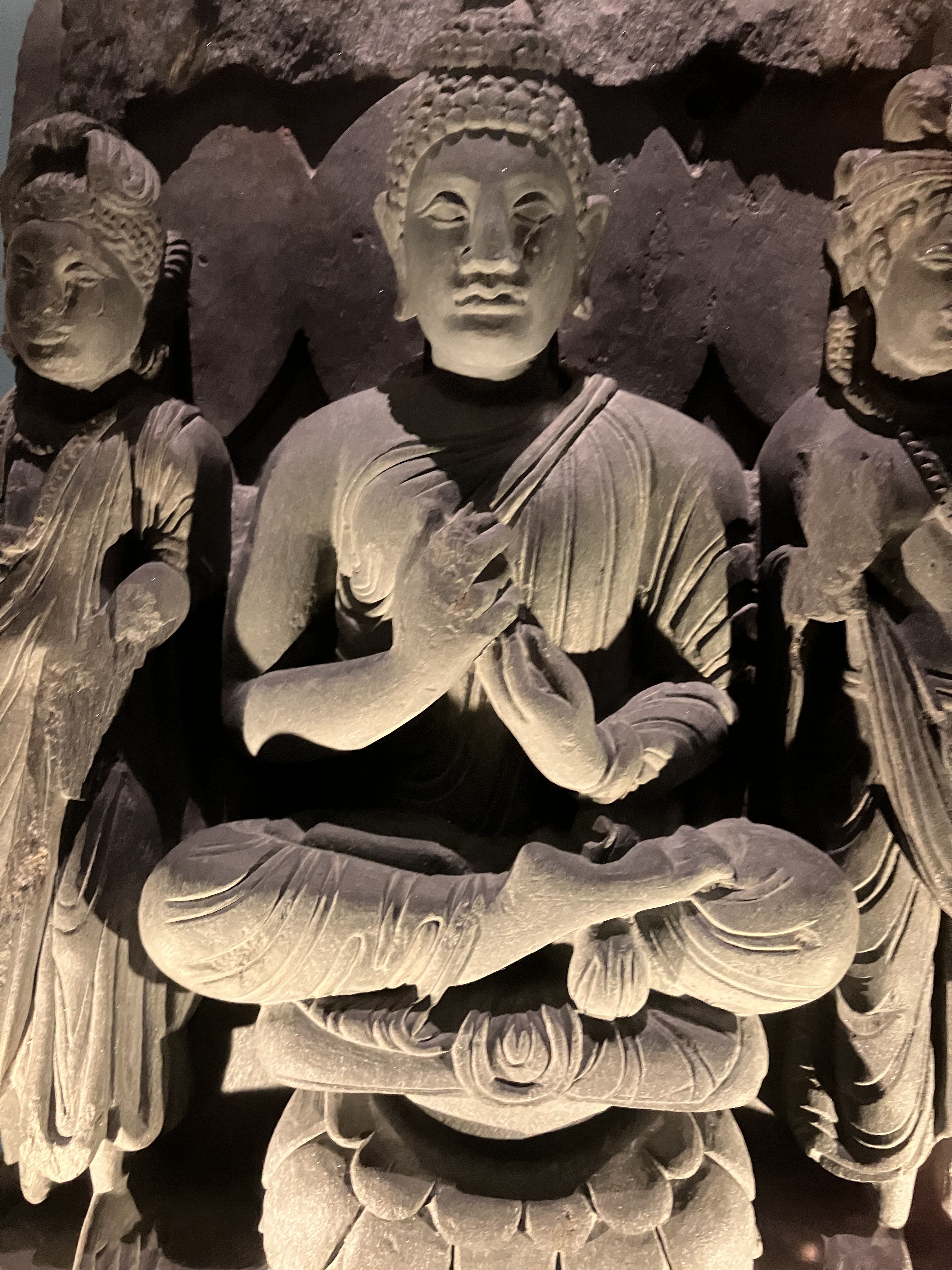
What struck me most profoundly was understanding how these living religious traditions and their sacred art had become integral to the daily lives of almost two billion people around the world, including in the UK. The key loans from community partners, which helped tell this contemporary story and make the ancient feel remarkably present and relevant, deeply moved me.
The exhibition showcased more than 180 objects – including sculptures, paintings, drawings and manuscripts – from the South Asian collection at the British Museum as well as generous loans from national and international partners. I found it refreshing and important that the exhibition highlighted provenance, examining the stories of every object in the show from creation to its acquisition by museums.

From the symbolic footprints which preceded portrayals of the Buddha in human form to the cosmic serpents incorporated into Hindu art and the nature spirits who attended Jain enlightened teachers, I discovered this compelling exhibition told the ancient stories behind these living traditions in a way that was both educational and deeply moving.
Faith as Living Practice
But perhaps what resonated most deeply was the exhibition’s demonstration that faith is never monolithic—it is constantly evolving, adapting, transforming. This insight sparked my curiosity about how contemporary artists are engaging with these same spiritual themes today. While researching this further, I discovered a remarkable renaissance happening in the art world, where artists are moving beyond surface-level appropriation to create genuine spiritual dialogue.
Contemporary Tibetan artist Gonkar Gyatso, for instance, questions traditional Buddhist iconography in works like Dissected Buddha, arguing that “an artist should be free to use the form of the Buddha like a canvas.” Meanwhile, artists like Mariko Mori are creating immersive video installations that reference Japanese Buddhist iconography, using technology to craft new ritual experiences. Indian artist Anju Dodiya reimagines Hindu gods to reflect contemporary human emotions—fear, loneliness, and self-discovery—delving into their metaphorical relevance in today’s world. (I love her work – see more here)
What strikes me as particularly significant is the gap this reveals in Western contemporary art. For too long, Western artists have either rejected spirituality entirely or reduced it to commercial kitsch. Yet these Hindu, Buddhist, and Jain traditions demonstrate how sacred themes can be approached as living, breathing material for genuine artistic exploration. As one art historian noted, “spiritual discourse is largely invisible in most Western contemporary art,” partly because “many artists and critics lack the language and the concepts to speak about the spiritual in art.”
The contrast is telling. Where Western contemporary art often treats spirituality with suspicion—viewing religious engagement as limiting rather than expansive—artists working within these South Asian traditions show how faith can be a springboard for innovation, not constraint. They demonstrate that honouring ancient wisdom doesn’t mean stagnation; instead, it can fuel the most contemporary forms of creative expression.
I’m definitely interested to see what artists are doing with faith subjects, so I’ll be keeping an eye open. I have written a bit about Esoteric Art, and it has its own scene, and I like a lot of it. But it can also be awfully kitsch. And the new fashion for ‘occulture’ art shows is good in a way, but I do wonder how much those curating or writing about them actually know about the actual occult (occult means ‘hidden’ so it’s a bit of work to actually know enough about it).
The British Museum experience left me with a profound appreciation not only for the continuity and evolution of these sacred artistic traditions across millennia but also for the immense creative possibilities that remain largely untapped in contemporary Western art. There is space for so much more—for artists who can engage seriously with spiritual themes without falling into commercialisation or superficiality, who can create new forms of transcendent experience while honouring the profound wisdom embedded in humanity’s sacred traditions.
 THE ART TRAVELLER
You must be logged in to post a comment.