14 Percy St London W1 19-24 November
I had just been to see the marvellous exhibition by Ben Edge when I was walking down Percy Street and my eye was caught by a fabulous looking exhibition. It looked so bright and fascinating and inviting that before I realised it I was drawn in.
I’m really glad that happened because I saw some wonderful artworks. It was kind of a drastic difference to Ben Edge but somehow it all fitted into a pretty wonderful art day for me.
Second Lives, curated by Paula Lent and Jane Neal, is described as “art born of rich experience, parallel lives, and reinvention.” The idea is that the artists in the exhibition are true artists, but they are not the outsiders that Romantic tradition still expects artists to be (hint, most aren’t). They have very successful parallel careers, many of which they are better known for. It’s an exciting and illuminating exhibition because it shows how deep the creative spirit runs, letting us realise that many people, given the opportunity to have a second life in art, would create incredible things. Sadly, it is not always that easy, but even so, this exhibition is very inspiring. I know people myself who are outstanding artists, but spend most of their time doing other work; fortunately, at least some of them manage to create art as well.
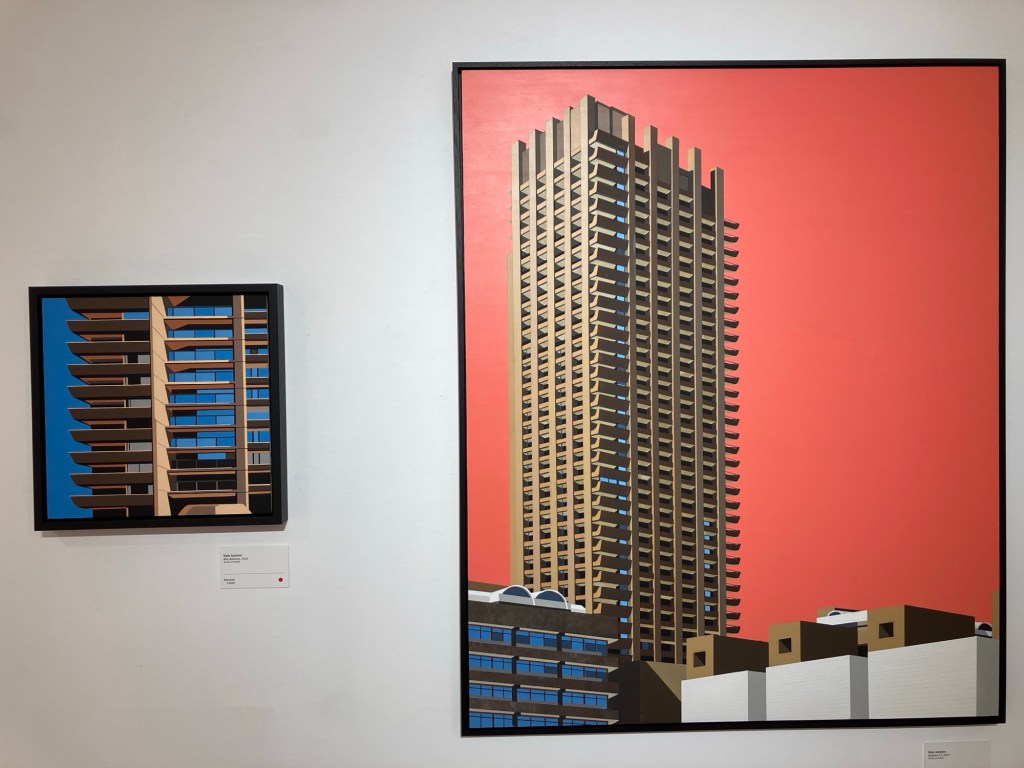
I like the work in the exhibition. It was all distinctive and fascinating. Of course I had my favourites; particularly did I like the paintings by Kate Jackson, of the concrete jungles of British brutalism. This is hard edged painting at its finest. My favourite pieces were her depictions of the Barbican. Her Barbican is a brutalist ideal because the real Barbican urban complex ( which I go to quite often) is softening at the edges. Years of weather and frequent use has filed down the brutalist sharpness and faded the building materials; plants grow out of unexpected cracks and of course it’s always full of people. Jackson’s views of the Barbican are pristine,uninhabited, idealised.
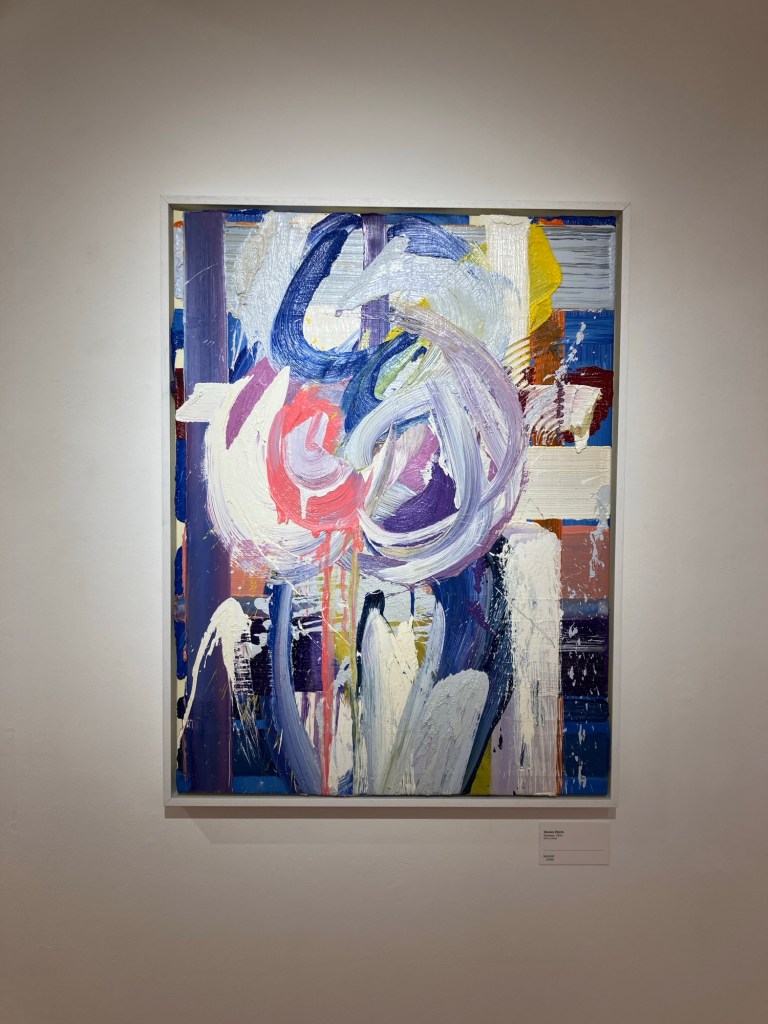
Wesley Eberle is an American painter who here presents swirling, expressive, semi-abstract paintings with deeply coloured, thick brush strokes, impasto, blending colour in a giddy, heady way. Yet the paintings aren’t decorative in the usual sense; they have something more going on. The exhibition catalogue explains that his paintings are rooted in the tradition of American abstract expressionism. I can see that, and his sensitivity to colour definitely connects with Colourfield painting. Still, there’s something a bit more fun than that. When I read that he actually works as a senior political and communications consultant, it makes me understand that this is someone who’s constantly dealing with some of the trickiest issues in the real world. So the paintings are his escape. But actually not. It’s not really an escape. He paints as an attempt to make sense of it all, and I felt that when I was looking at the paintings, my perception of the world resolved itself more positively.
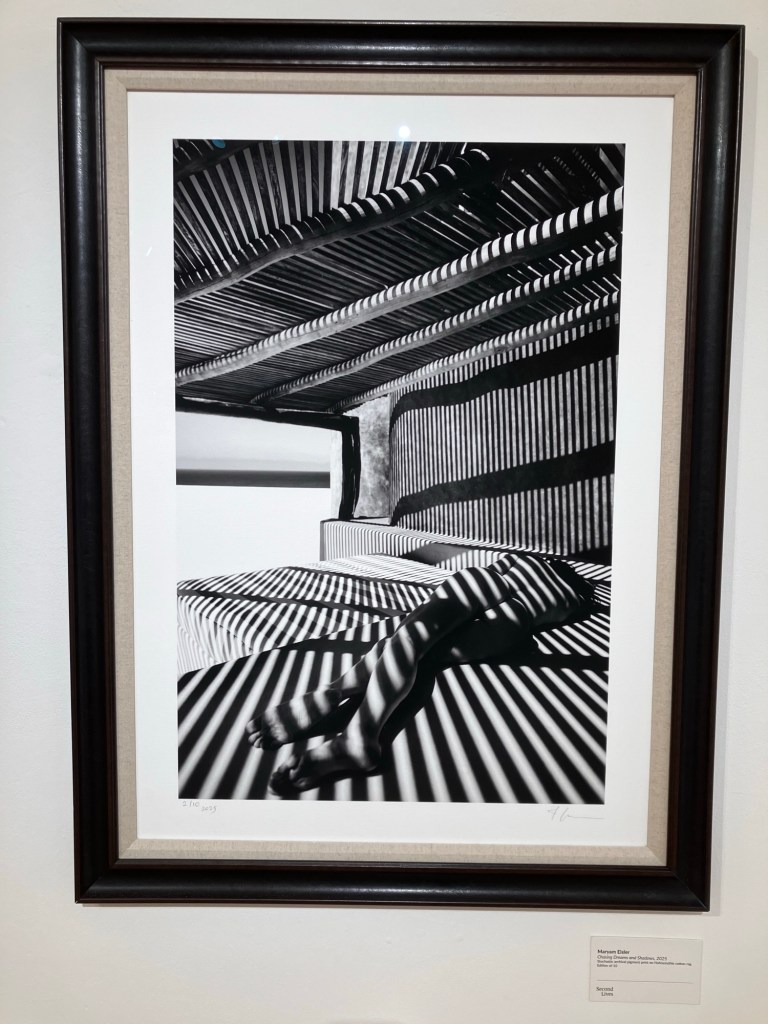
The third artist in the show whose work I especially liked was Mariam Eisler who emerged from brand management and marketing in the beauty industry to being a very powerful photographer whose work explores the notion of the sublime feminine. These are compelling pictures that sit comfortably yet challengingly in liminal space between fashion photography, portraiture and photographic history There are elements of Edward Weston, Lee Miller, Cecil Beaton, Avedon and David Bailey in her pictures. Still, she’s coming at it from an intensely feminine, and I would say feminist perspective. She’s not afraid of beauty, she’s not scared of female sexuality. She doesn’t even find it mysterious or exotic. She presents it from the point of view of someone who really understands it, which is quite a fresh and different experience for the viewer.
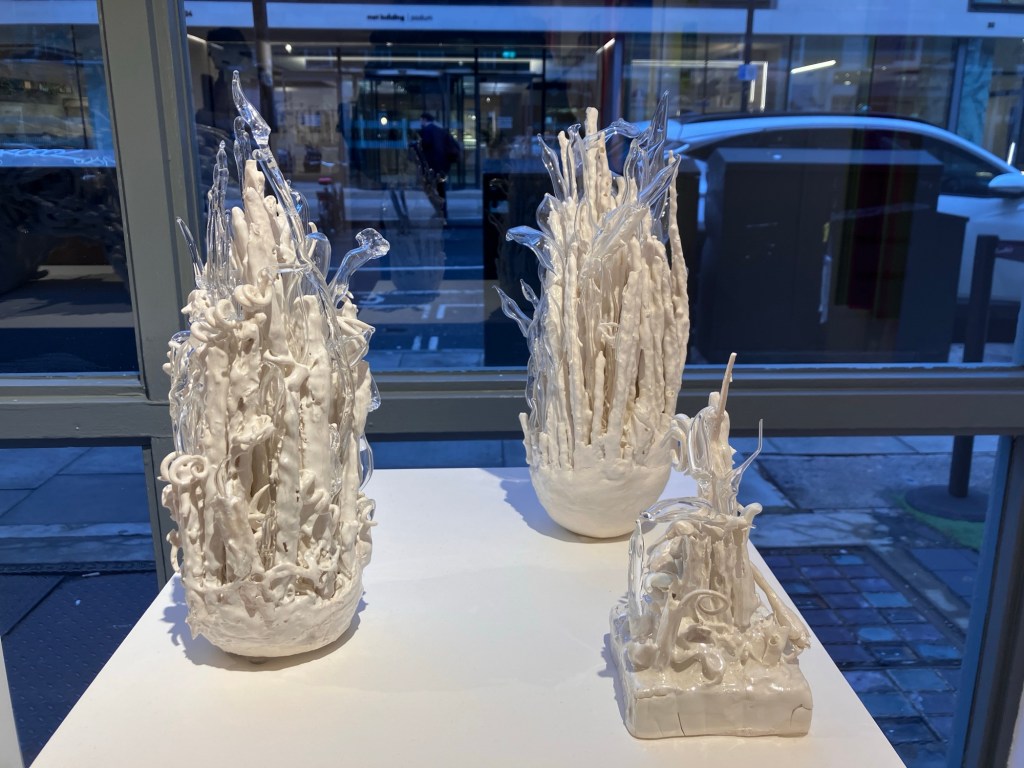
I was encouraged into the exhibition by the gorgeousness and gloriousness of Lucille Lewin’s porcelain sculptures. These are delicate, almost ephemeral forms made from porcelain, metal, and glass that strongly resemble organic matter, but at the same time don’t resemble anything that actually grows, at least that I know of. Their mystery was quite compelling. I thought I would really like to touch them, which, obviously, I couldn’t. I also felt that I would really love to fill my house with them, which I also couldn’t, but they’re absolutely delightful.
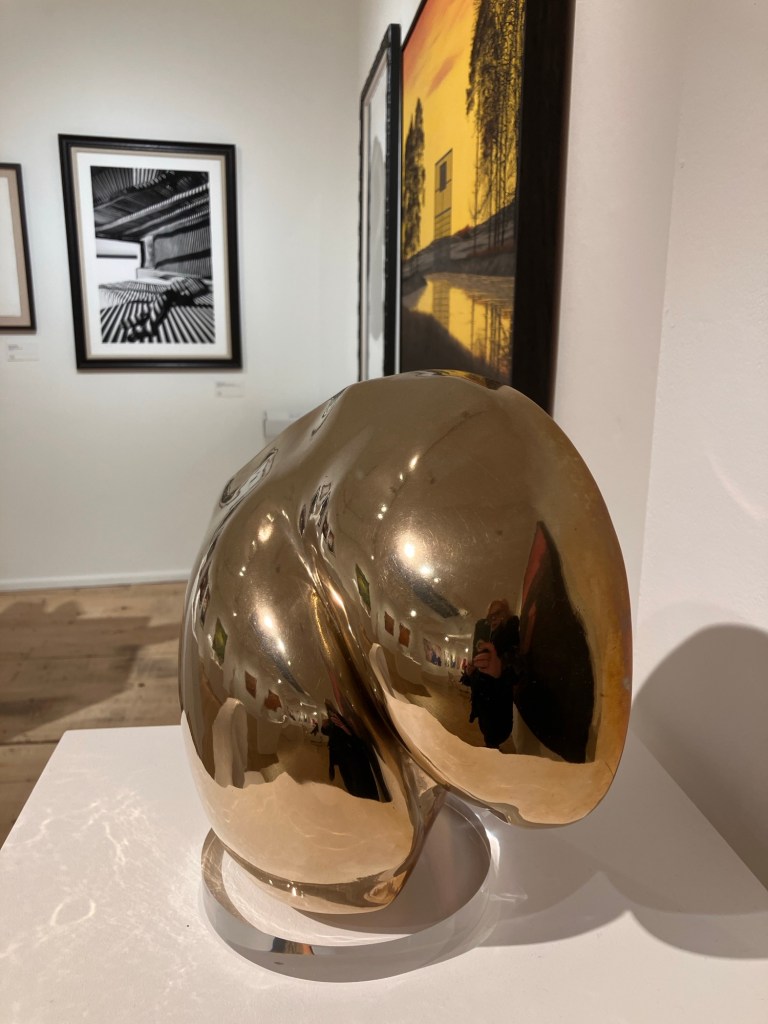
Nicole Farhi’s smooth sculptures are quirky and undeniably cheeky; literally so in some cases. (See above)
Of course, Farhi is very well known as a fashion designer, and you can see her sense of form in these beautiful sculptures. They have powerful physicality: body-like yet totally non-human.

Finally, David Rae’s paintings made a fine counterpoint to Kate Jackson’s work in this exhibition, and I would love to see a bigger exhibition of the two of them together. Rae’s landscapes are odd and haunting. This fantastic one, called The Original Racecourse, is, on the one hand, a very gorgeous sunset painting; on the other hand, there’s something a little bit creepy and dystopian about it. I stared at it for a long time, trying to figure out precisely what was so unsettling. After all, I’ve seen many landscapes in the real world like this before. Is it the colour? Does it give a kind of apocalyptic sense? Is it because the bridge is so decrepit? So indicative of decay.? Rae’s work hovers between realism and the sublime in a way which is uncanny and unsettling, and all the better for it.
Second Lives is a great theme for an exhibition but I would really like all people who have artistic tendencies to have second or third lives as artists. The exhibition shows that artistic talent finds its way and I wish that more people in society would be ready to grasp that this is a truly wonderful thing. I didn’t need to be persuaded, but I’m sure this exhibition could be persuade even the stoniest of hearts.
 THE ART TRAVELLER
You must be logged in to post a comment.