Inside the visionary world of the sculptor transforming waste into wonder.
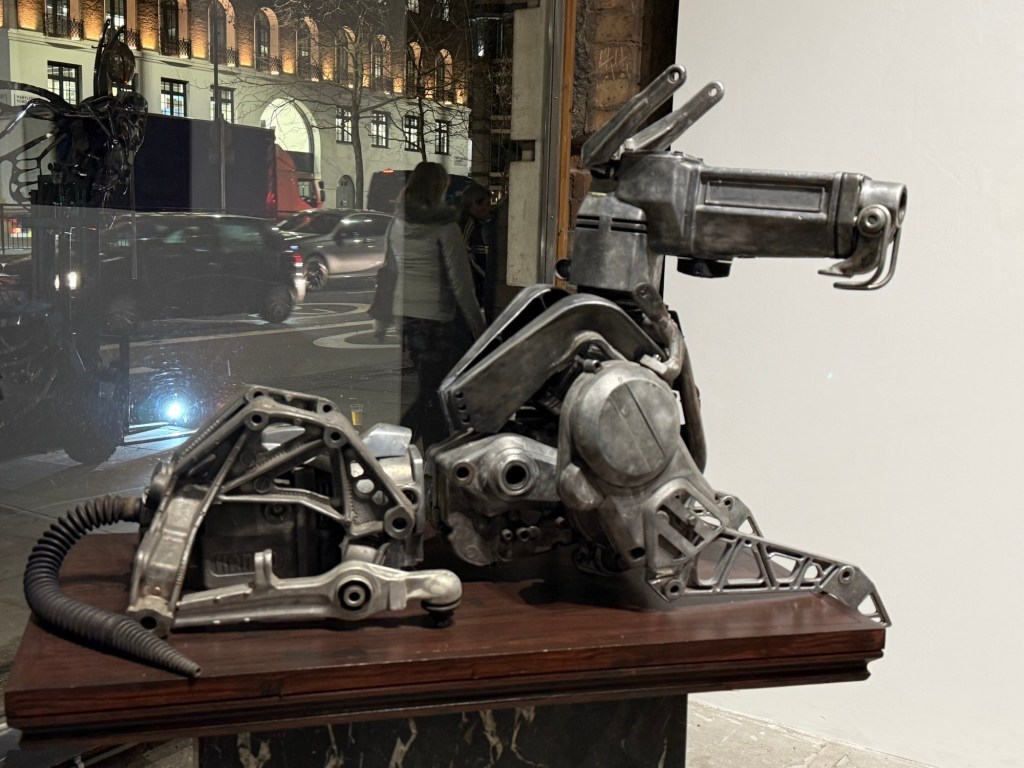
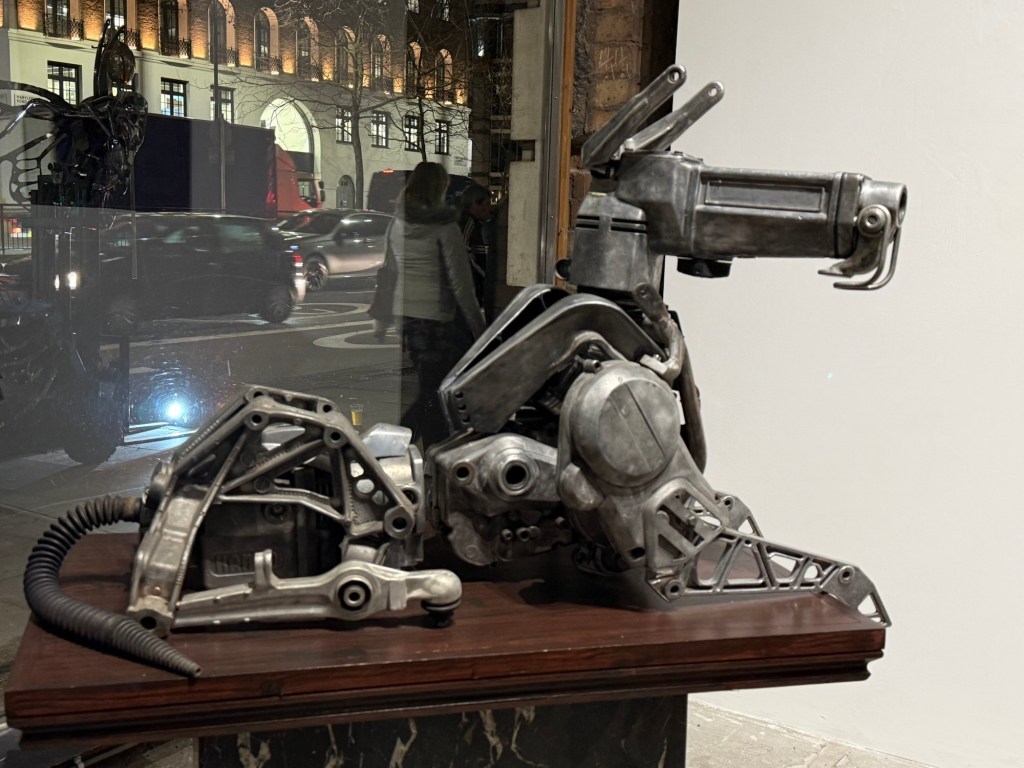
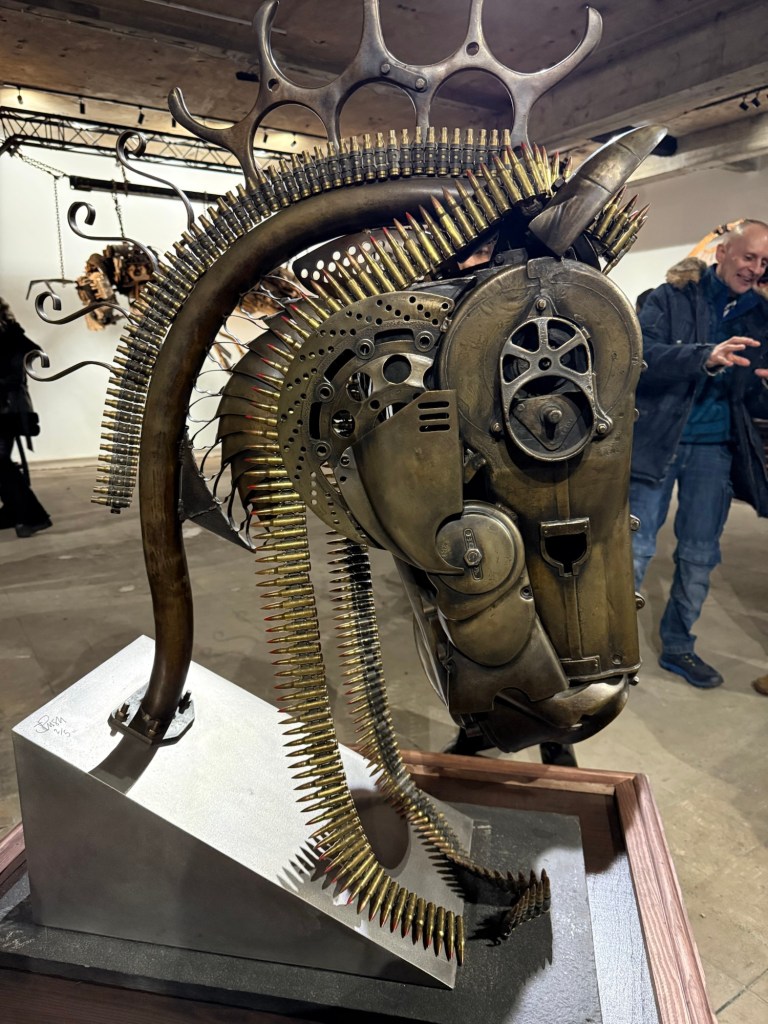
I’ve had about two glasses of Prosecco and caught up with all the gossip. Things are starting to get a bit comfortable, yet that is not what I came here for. I came here to see art that would blow my mind. I did see it when I arrived; as I approached, I could see wonders through the windows of the large space on Marylebone Road. It was full of giant hunks of metal crafted into incredible forms. I saw fossils, dogs, birds, and all manner of creatures — all of them made from scrap metal.
But then, as you do, you just relax and have a drink and start the chat. Suddenly the buzz and hum of the crowd quieten down. At this point I’m standing outside with my friends who are, sad to say, smoking cigarettes. A blast of a familiar song comes up the street — an archaic song I haven’t heard for many years: Submission by the Sex Pistols — and then I see it: a grand carriage of a kind I have never seen before on the streets of London, propelling its way up the pavement from Baker Street towards the gallery. Suddenly I know what it is. It is the arrival of the man himself, Joe Rush — the original cyberpunk, scrap‑metal merchant of dreams.
The strange collage of a carriage finally stops and the Sex Pistols wind down. Joe alights, smiling expansively, and strides towards the door. Everybody gathers around. By this point I slip into the building so I can see at firsthand what’s going on. Joe stands right by the door and, despite being well over six feet tall and dressed in a sort of military‑punk gear, he seems so humble. I would’ve thought that after putting together such an incredible exhibition the last thing you would be was humble — but no. He starts to speak, and he tells us this exhibition is called “Unnatural” because his creatures are made from the waste of our civilisation, all the crap we throw away that he picks up. When he looks at it, he can see something more than what it is.
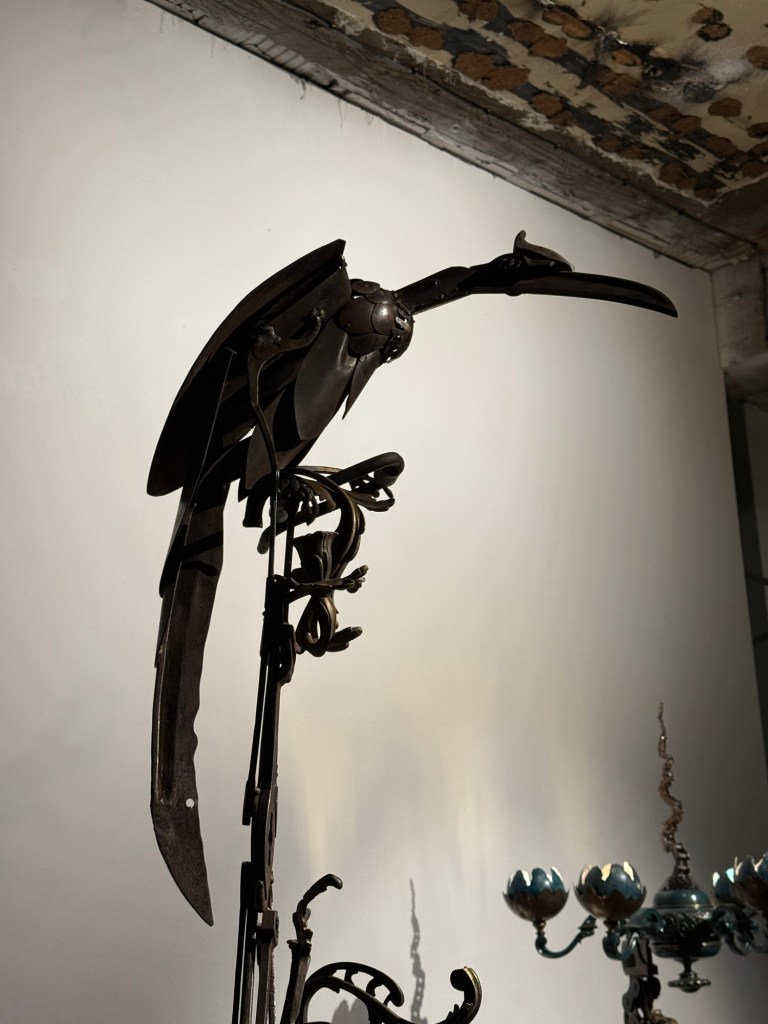
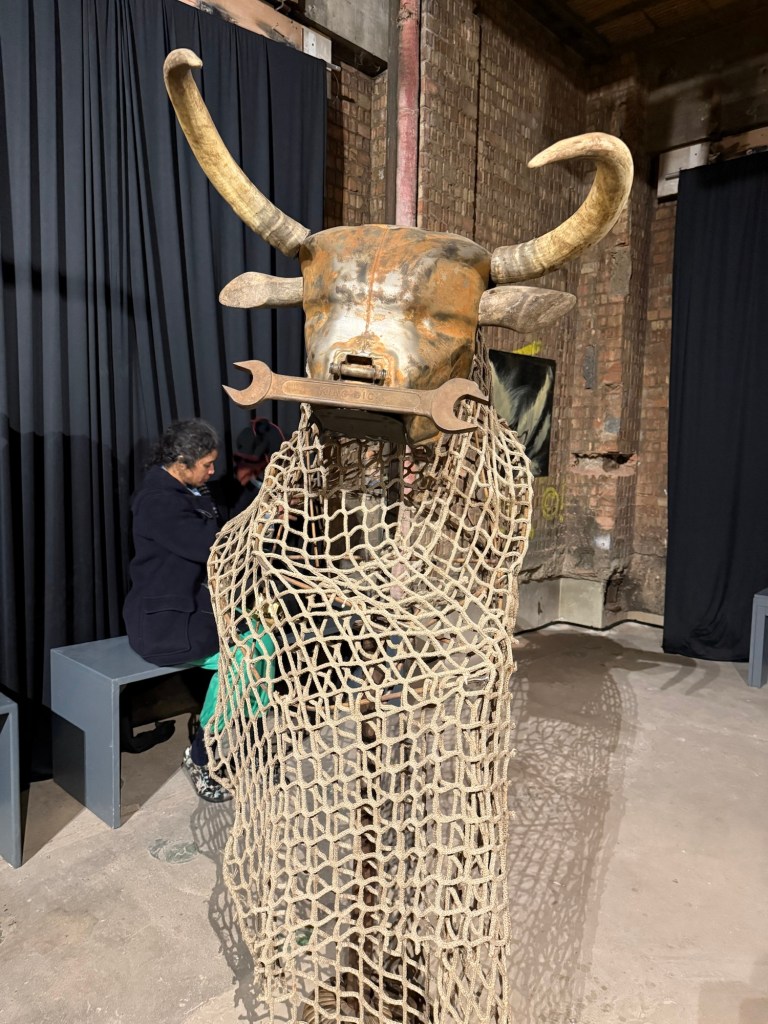
And so, out of this garbage, he fashions the most amazing things, and everything he has fashioned here is some kind of organic being: a creature, a plant, an animal, or in one case, a person. We recognise exactly what they’re made of, yet at the same time we recognise exactly what they are. It’s an incredible merging of material and spirit. Moreover, says Joe — and at this point he really holds us with his eyes — it is important that we look after this planet because it’s the only one we’ve got, and look after the animals and the wildlife because it’s the only world we’ve got. It’s bloody moving. I mean, he’s preaching to the converted. I don’t think there’s anybody here who wants to spray the world with Agent Orange or despoil the countryside, but we’re very aware that there is a hell of a lot of people out there who do want to do that and more. But there are enough of us in this gallery hanging on Joe‘s words that we could probably put up a decent enough fight if we’re called upon to do it.
Joe keeps his speech very short and sweet and then saunters off to be congratulated and met by his huge number of friends and admirers. He’s an impressive man with his heart in the right place and a talent that is unmatched by anybody else in this country. He is, to be completely blunt about it, the best sculptor alive in Britain today. He just is. He really knows what he’s doing. He has the feel for his materials: he can look at, for example, an old bicycle chain and see it as something completely different. His pieces are flawless — there’s not a single one that looks dodgy. He absolutely explodes your sense of what art can be. His imagination is limitless. Every piece is perfectly proportioned, well considered, and impressive.
But then he’s never been to a fancy art school, and he doesn’t have that kind of profile. Or does he? Well, he doesn’t exactly exist within the art world, but he isn’t exactly excluded from it either. He was the one they turned to to design the Paralympic Games, and he did an amazing job of it. He’ll put his hand to things that he likes and believes in, but he’s clear that there are things he’s not interested in.
When he chose the Bomb Factory Foundation Gallery for his solo show in London (I don’t know if it’s his first solo show ever in London, but it’s certainly the first one I’ve ever seen), he did so knowing that the Bomb Factory is a fantastic arts charity that provides space for artists and repurposes otherwise‑empty buildings in the city. It’s also a fantastic space: it’s not overly polished, but it’s big, and it gives Joe’s creations lots of room to breathe. The opening was genuinely packed, yet the space was airy and we were able to wander around and genuinely appreciate the works.
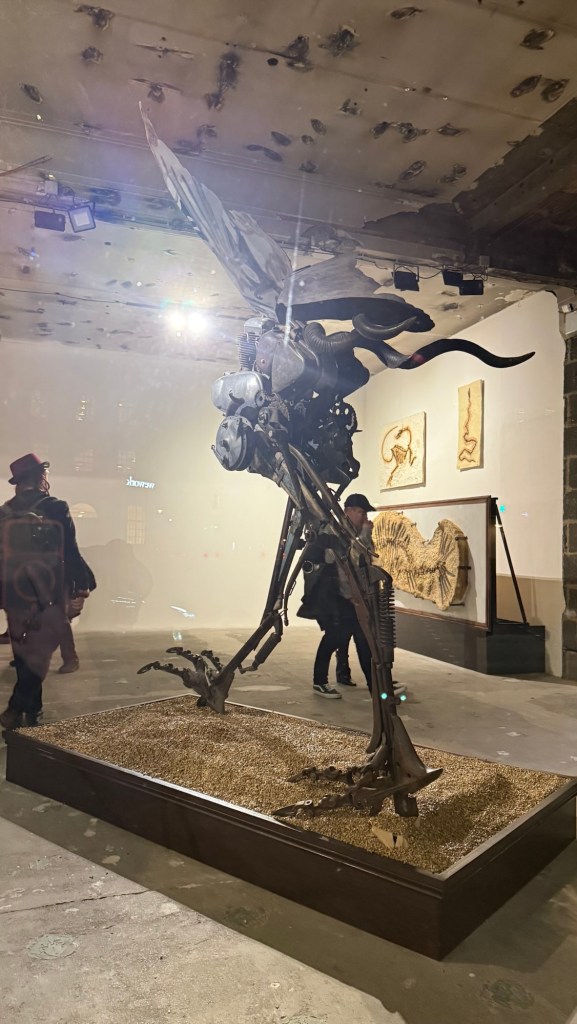
So, who is Joe Rush anyway? If you are a follower of contemporary art you may not know his name at all which, given the work you can see in these pictures, might seem surprising. But if you frequent the Glastonbury Festival you possibly do know him, because he and his group, the Mutoid Waste Company, have been involved with Glastonbury for decades and they create sculptures and installations for every festival. I’m not a Glastonbury person (really, I can’t imagine being made to be with that many people over several days — it would just trigger all of my anxieties and claustrophobia), so I’ve never been, although I’m sure it would be really cool. But I have seen Joe’s work at underground parties when I first came to London, and a few years ago he was involved with a really fantastic show in Fulham which I enjoyed very much and which really showcased his work.
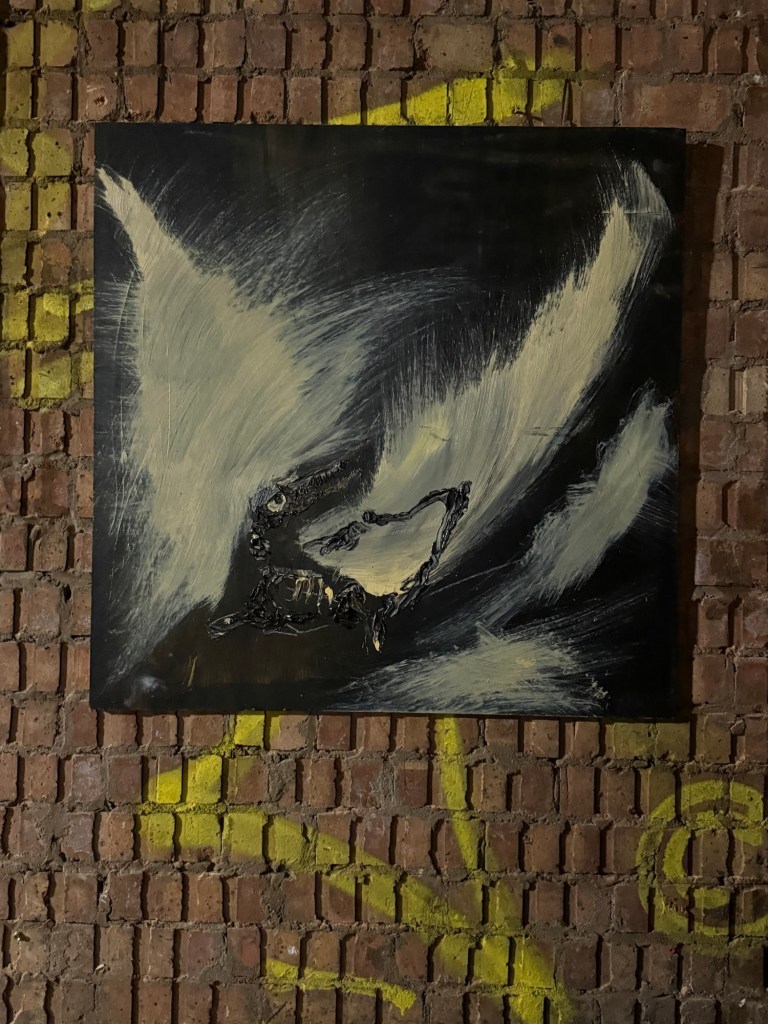
The Mutoid Waste Company is legendary in British art history, even if the standard art historians haven’t really given it its due. Founded in the 1980s, it is an art collective renowned for its innovative use of scrap metal and discarded materials, transforming waste into striking sculptures and immersive installations. Their work blurs the boundaries between art, engineering, and activism, often making bold statements about recycling and urban regeneration. Joe Rush co‑founded the group and has long been its pivotal figure. His creativity and commitment to environmental themes have made him a prominent influence on contemporary urban art. He has many fans in the more alternative and underground sectors of the art world — but as I said, he’s not an outsider artist either. It’s an interesting place to be, but I think the most important thing about his work is his absolute, unwavering commitment to artistic freedom, expressing what he believes in and doing it through art.
This wonderful exhibition offers a compelling insight into Rush’s unique vision and the transformative power of reclaimed materials.
 THE ART TRAVELLER