Reflecting on ammonites, sacred geometry and the unexpected beauty of deep time in Valencia.
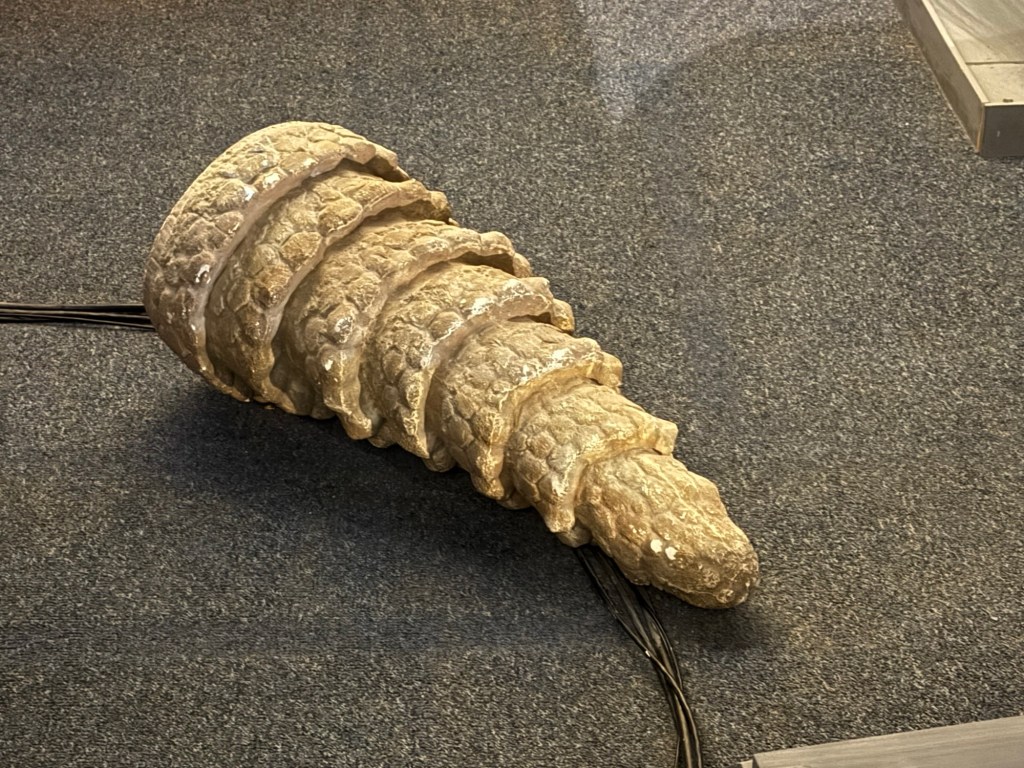
It may seem, at first glance, a little unexpected to begin a reflection on art with fossils. Yet one of the most memorable moments of my 2026 travels arrived not through a painting, sculpture or architectural masterpiece, but through an encounter with something far older: the beautiful, spiralling form of the ammonite.
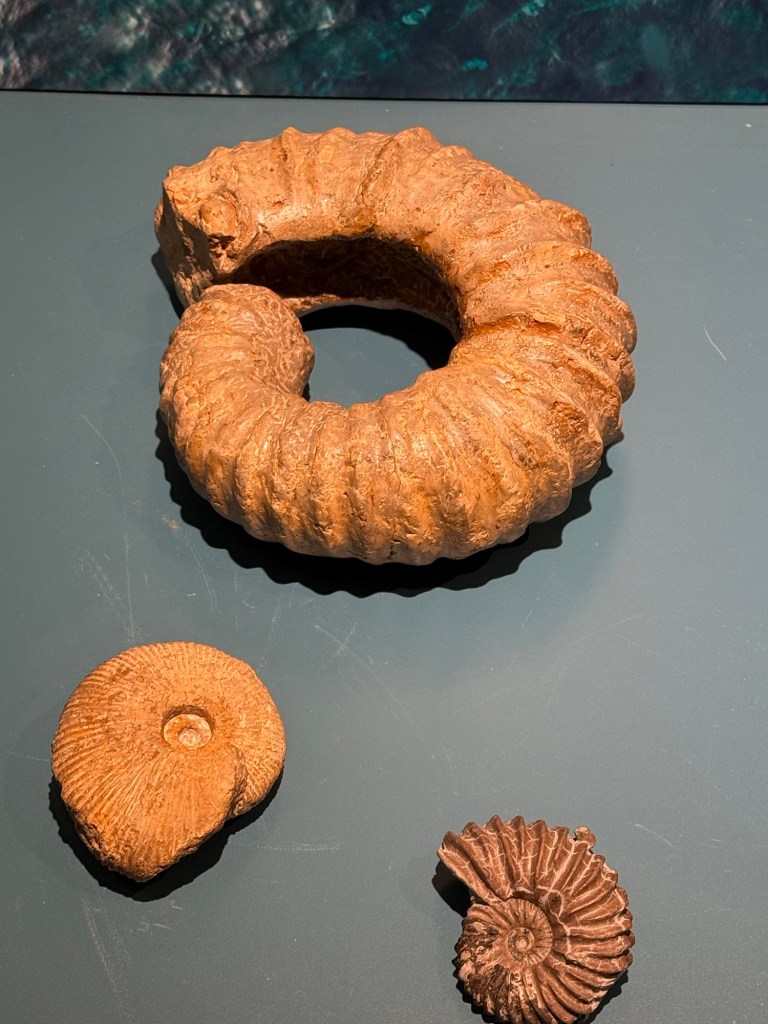
I was reminded of the deep relationship between art, nature and geometry during a visit I made in January 2026 to El Paleontològic, the palaeontology museum in Valencia, where I was living at the beginning of the year. Although palaeontology might not immediately appear to belong in a blog about art, the experience drew me back to one of art’s most enduring foundations: the sacred geometry that seems to underpin so many of the structures of existence.
El Paleontològic is home to more than 5,000 fossils, including around twenty striking skeletons of prehistoric mammals, with the imposing megatherium among its principal highlights. Its collection, still growing, feels unusually rich and distinctive within Europe.
The museum is both thoughtful and engaging in the way it presents natural science. Through artefacts, models and dioramas, it brings deep time into focus and invites visitors not simply to observe, but to imagine the worlds from which these remains emerged.
What struck me most, however, were the ammonites: those familiar spiral-shaped fossils whose elegance feels almost designed, as though nature had paused to draw a perfect line.
The name “ammonite” itself comes from the Egyptian god Amun, who was often represented with ram’s horns curling in a similar spiral form. These creatures first appeared roughly 400 million years ago and disappeared at the same time as the dinosaurs, around 66 million years ago. Their shells were not merely decorative or protective: they were divided into internal chambers, which helped the living animal regulate buoyancy as it moved through ancient seas.
Standing before them, I found myself thinking less about extinction and more about continuity. The ammonite’s spiral belongs to the family of forms we often associate with sacred geometry: patterns that appear in shells, plants, storms, galaxies and, by extension, in the visual languages of art and architecture. The logarithmic spiral winds outward while retaining its essential shape, suggesting growth without rupture, movement without loss of identity.
This is what makes the ammonite so fascinating. It offers a physical, almost modestly beautiful example of a principle that artists have explored for centuries: proportion as a form of harmony. The spiral recalls the Golden Ratio, that much-discussed mathematical relationship often associated with visual balance and compositional grace. Whether or not every ammonite can be reduced to a perfect golden spiral is less important than the broader truth it suggests: nature often grows through patterns that the human eye recognises as ordered, balanced and satisfying.
For me, the ammonite became a small lesson in the relationship between expansion and structure. As it grew, it added new chambers, each larger than the last, while preserving the same underlying proportions. This is a compelling metaphor for creative life. Growth need not mean abandoning one’s centre; it can mean enlarging one’s capacity while remaining connected to an inner coherence.
This idea also speaks directly to art. Artists and architects have long been drawn to natural geometries because they offer a bridge between observation and meaning. The spiral can guide the eye through a painting, organise a façade, structure a photograph or become a symbol of time, evolution and return. It is both formal and poetic: a shape that moves, expands and remembers.
In this sense, the ammonite is more than a fossil. It is a record of a life lived in stages, a compressed timeline held in stone. It also reminds us that art is not separate from science, nor is beauty separate from function. The same structures that allowed a prehistoric sea creature to survive can also help explain why certain forms feel so enduringly resonant to us.
The setting of El Paleontològic added to the experience. Located within the green elegance of the Jardines del Real, the museum is surrounded by a landscape that encourages the very kind of attentiveness the collection deserves. Wandering afterwards through the gardens, listening to the birds and noticing the variety of plants and trees, I felt that particular combination I always hope travel will offer: relaxation, curiosity and inspiration.
For The Art Traveller, this was one of my unexpected highlights of 2026: a reminder that art is not found only in galleries or museums dedicated to human making. Sometimes it appears in the curve of an ancient shell, in the mathematics of growth, and in the quiet recognition that beauty has been present in the world for far longer than we have been here to name it.
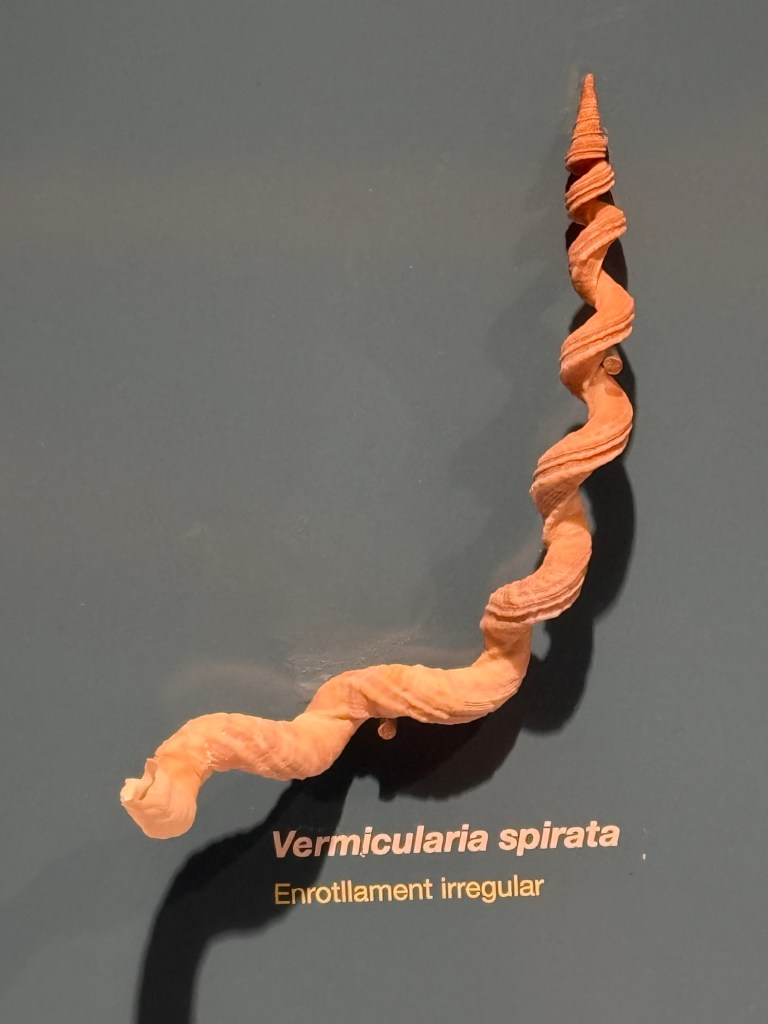
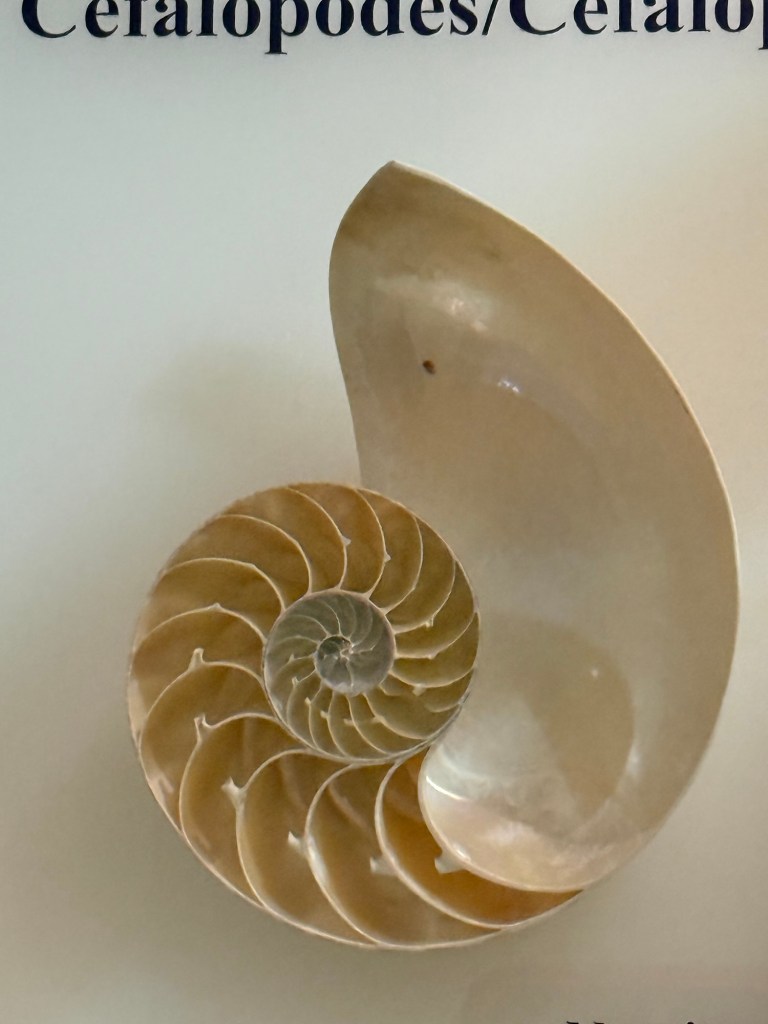
Looking back, this was exactly the kind of experience I treasure most as The Art Traveller: a quiet discovery that opened up into something much larger. What began as a visit to a palaeontology museum became a meditation on beauty, structure and time. The ammonite stayed with me because it seemed to hold so much in one small form — nature, mathematics, history and art — all spiralling together.
EL PALEONTOLÒGIC-MUSEO DE COLECCIONES NATURALES
- GENERAL ÉLIO (Jardines de Viveros), S/N
- 46010, VALENCIA
- Teléfono: 96.208.43.13
- Web: https://www.valencia.es

